EN
EN

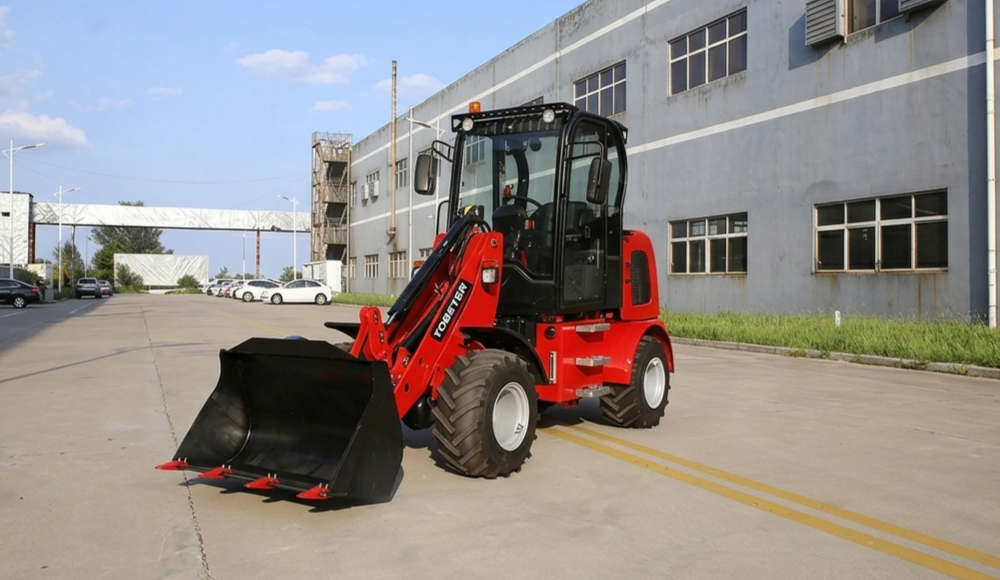
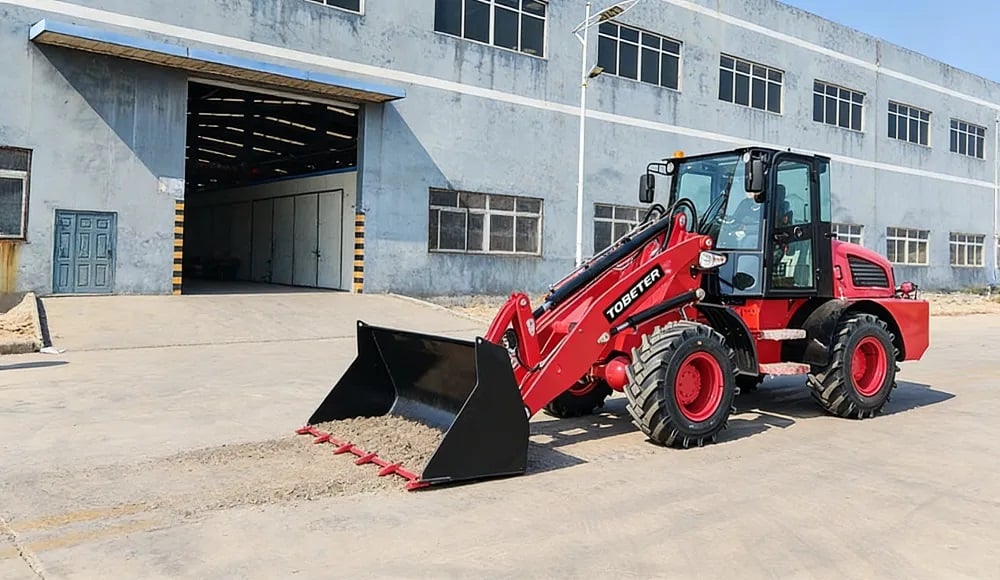
When winter weather strikes, the clock starts ticking. For property managers, municipalities, and private contractors, the goal is always the same: clear the pavement as quickly, safely, and efficiently as possible. While the industry often defaults to heavy-duty pickup trucks with plows or massive wheel loaders, there is a growing realization that the small articulated wheel loader is actually the superior choice for modern snow management.
At TOBETER, we analyze equipment performance based on maneuverability, visibility, and total cost of ownership. Here is why the compact loader is the "Goldilocks" solution for snow—strong enough to move heavy drifts, yet agile enough to navigate a crowded parking lot.
The primary advantage of a small articulated loader is its "waist." Unlike a skid steer—which must "skid" its tires across the surface to turn—an articulated loader pivots at a central hinge.
The Pivot Factor: When the machine turns, the rear wheels follow the exact tracking path of the front wheels. This "true-tracking" is vital when you are clearing snow around expensive parked cars, light poles, or narrow gated entrances.
Reduced Surface Damage: Because the tires roll through the turn rather than scrubbing against the pavement, there is far less risk of leaving unsightly black marks on decorative concrete or damaging the sub-base of a parking lot.
Tight Spaces: Small loaders can navigate "dead-end" alleyways and tight loading docks where a truck and plow would be forced to perform a 20-point turn.
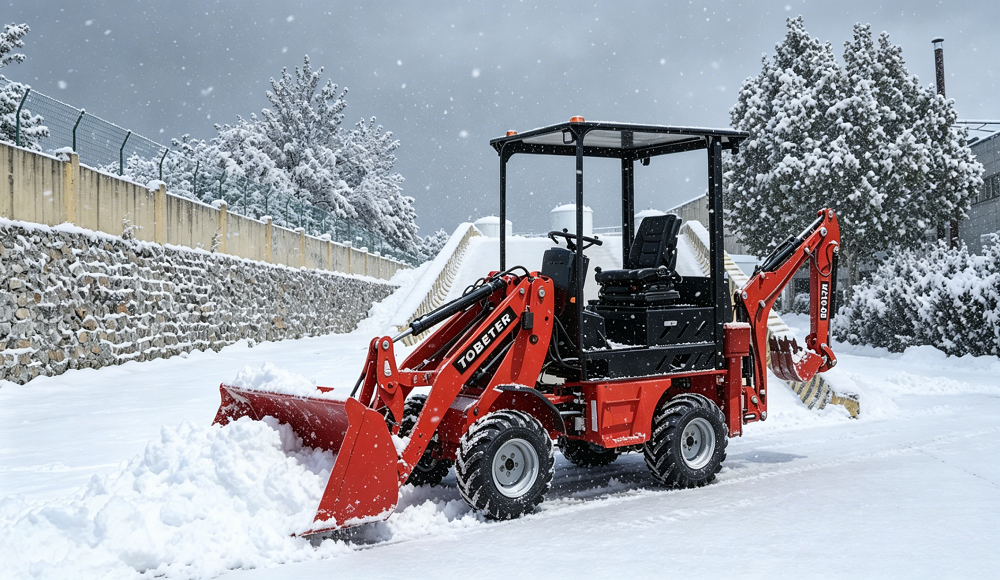
Snow removal is often a high-risk activity, frequently performed at night, in low-visibility blizzard conditions, and in areas where pedestrians or "hidden" obstacles exist.
High Seating Position: In a small wheel loader, the operator sits significantly higher than in a pickup truck or a skid steer. This 360-degree field of vision allows the operator to see over the top of the snow pile they are pushing and monitor all four corners of the machine.
Less Blind Spots: Large, floor-to-ceiling glass in modern cabs ensures that the operator can see the edges of the plow or pusher at all times. This reduces "curb-clipping" and helps prevent damage to landscaping hidden under the snow.
Snow removal requires a delicate balance of weight. You need enough "mass" to provide traction and pushing force, but you want to avoid a machine so heavy that it becomes a liability on sidewalks or soft asphalt.
Efficient Traction: Small loaders distribute their weight evenly across four large tires. When equipped with specialized winter treads or "snow siping," these machines can push significantly more weight relative to their size than a standard 4WD truck.
The "Blacktop" Scrape: The weight of a loader’s lift arms provides natural downward pressure. This allows the plow edge to get underneath the snow and ice, scraping down to the pavement in a single pass rather than leaving a slippery "skin" of snow behind.
In the snow business, "travel time" is wasted time. You need to get between your job sites quickly without the hassle of a trailer.
High Travel Speeds: Many compact wheel loaders are capable of travel speeds between 15 and 20 mph. In urban environments, this allows the operator to simply drive the machine from one shopping center to the next, eliminating the 15–20 minutes spent loading and unloading a trailer at every stop.
Transmission Efficiency: Hydrostatic transmissions allow for smooth, instant transitions between forward and reverse. This is critical for "shuttling" snow into a pile, where the machine may change direction hundreds of times per hour.
One of the strongest arguments for the small loader is that it doesn't have to sit in the shed once the ice melts.
Year-Round Utility: A pickup truck with a plow often spends its summer as a standard transport vehicle, but its "snow work" puts immense strain on the transmission and front suspension. A small loader, however, transitions seamlessly into landscaping, material handling, or construction work in the spring.
Quick-Attach Systems: The same machine that pushes a 10-foot snow box in January can operate a set of pallet forks, a bucket, or a sweeper in July. This makes the TOBETER investment much easier to justify on a balance sheet, as the machine generates revenue 12 months a year.
Snow shifts are notoriously long, often lasting 12 to 16 hours during a major storm. An exhausted operator is a safety risk.
Ergonomic Design: Small loaders feature fully pressurized, heated cabs with automotive-style controls. Unlike the cramped, "jerky" controls of a skid steer, a wheel loader uses a smooth joystick and a steering wheel, which is much less fatiguing over a long shift.
In-Cab Technology: Modern units include defrosting systems, heated seats, and advanced lighting packages that turn night into day, allowing the operator to stay alert and productive until the job is done.
When you factor in the reduced fuel consumption (compared to a large truck or a 10-ton loader), the lower maintenance costs, and the drastically reduced risk of property damage, the small loader is the clear winner for modern snow removal. It offers the precision of a shovel with the power of a tractor.