EN
EN
In modern construction, warehousing, and industrial projects, material handling equipment plays a critical role in improving efficiency and safety. Among the most commonly used machines are telescopic loaders and forklifts.
While both are designed to move heavy materials, they differ greatly in lifting height, reach, terrain adaptability, and application scenarios. Understanding these differences helps businesses choose the right equipment for improved productivity and operational performance.
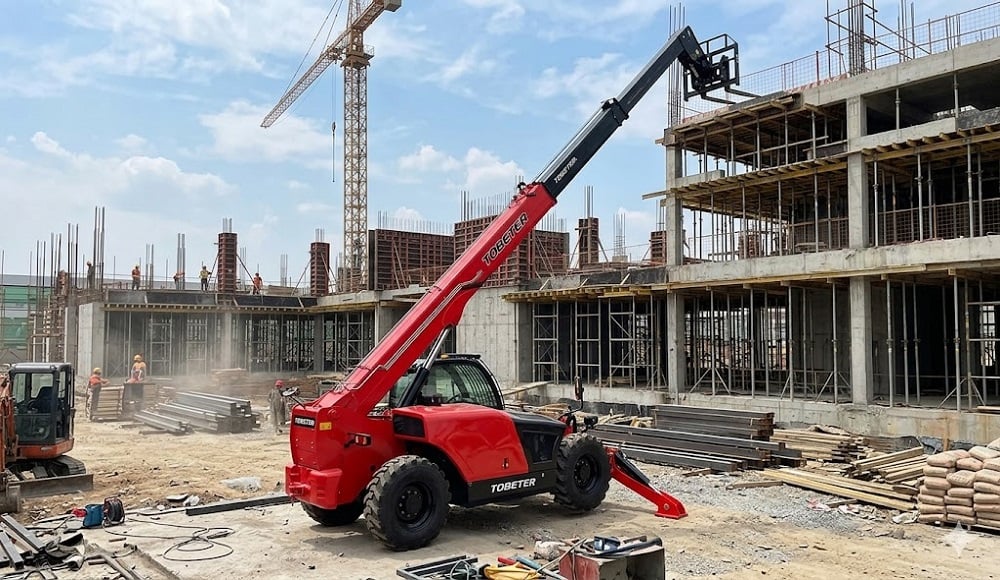
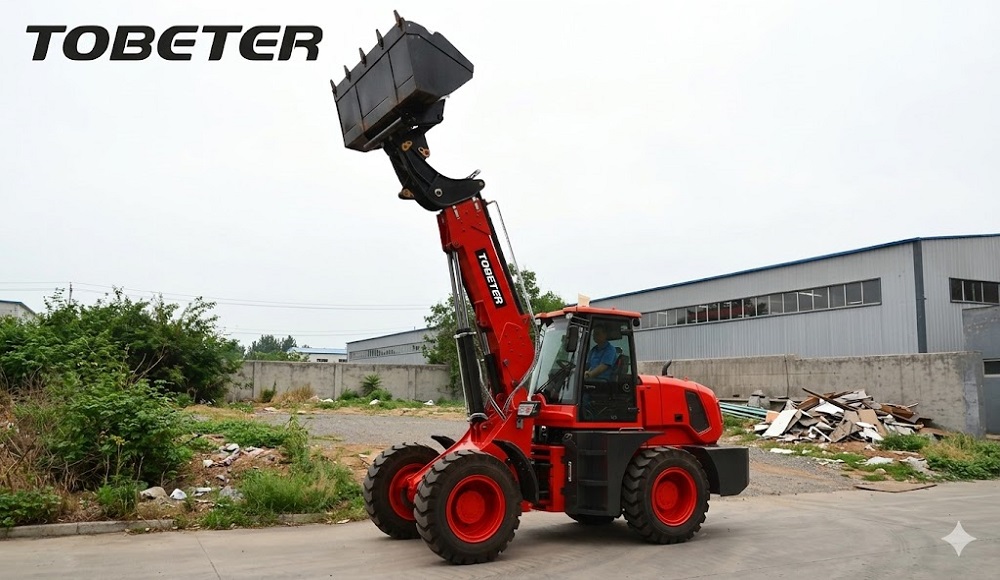
A telescopic loader, also known as a telehandler, is a versatile lifting machine equipped with an extendable boom. Unlike standard lifting equipment, the boom can move both vertically and horizontally, allowing operators to place materials at greater heights and distances.
Telescopic loaders are widely used in construction sites, agriculture, mining, and industrial projects. They can be fitted with various attachments such as buckets, lifting hooks, and pallet forks, making them multifunctional machines for different tasks.
One of the key advantages of a telescopic loader is its ability to operate on rough terrain. Large tires and strong ground clearance allow it to work effectively on uneven surfaces where traditional forklifts may struggle.
A forklift is a compact industrial vehicle designed mainly for lifting and transporting palletized goods over short distances. Forklifts are commonly found in warehouses, factories, logistics centers, and retail distribution facilities.
Traditional forklifts use two front forks to lift loads vertically. They are highly efficient in indoor environments with flat surfaces and narrow aisles. Electric forklifts are especially popular for indoor operations because of their low noise and zero emissions.
Forklifts are known for their maneuverability and ease of operation. However, their lifting range and forward reach are limited compared to telescopic loaders.
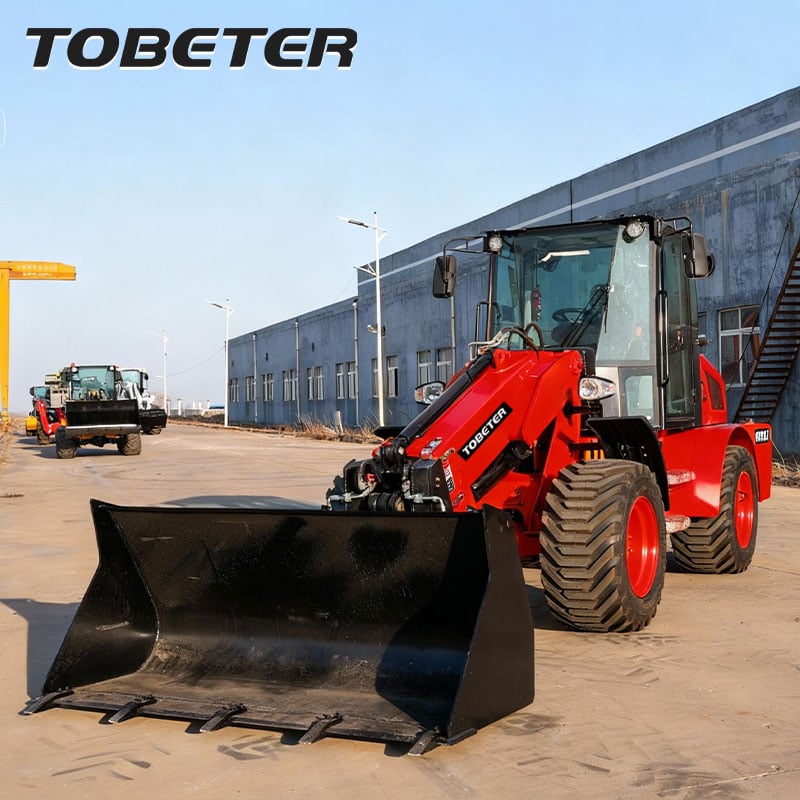
The biggest difference between these two machines is reach capability. A forklift mainly lifts materials vertically, while a telescopic loader can extend its boom forward and upward. This makes telescopic loaders ideal for placing materials on rooftops, elevated platforms, or hard-to-access areas.
In construction projects where materials must be moved across obstacles or to upper floors, telescopic loaders offer a clear advantage.
Forklifts perform best on smooth and stable surfaces such as warehouse floors. In contrast, telescopic loaders are designed for outdoor environments and rough terrain conditions.
Construction sites often contain mud, gravel, and uneven ground. The rugged design of telescopic loaders allows them to maintain stability and traction in these demanding conditions.
Telescopic loaders support multiple attachments, enabling them to handle different applications with a single machine. They can function as loaders, cranes, or lifting platforms depending on operational needs.
Forklifts are more specialized for pallet handling and warehouse transportation. Although attachments are available, their flexibility is generally lower than that of telescopic loaders.
Both machines are available in different lifting capacities, but telescopic loaders typically provide greater maximum lifting heights. This makes them suitable for large-scale infrastructure and construction projects where elevated material placement is required.
Forklifts, on the other hand, excel in fast and repetitive lifting tasks within controlled environments.
Selecting between a telescopic loader and a forklift depends on the working environment and operational requirements. For indoor logistics, warehouse storage, and pallet transportation, forklifts remain a cost-effective and efficient solution.
However, for construction projects that require extended reach, rough terrain capability, and multifunctional performance, telescopic loaders provide greater advantages. Their ability to improve access and lifting flexibility significantly enhances productivity on challenging job sites.
Both telescopic loaders and forklifts are essential material handling machines, but they serve different purposes. Forklifts are ideal for efficient indoor transportation and stacking tasks, while telescopic loaders are designed for superior reach, outdoor durability, and versatile operation.
As construction and industrial projects continue to demand higher efficiency, choosing the appropriate equipment can improve workflow, reduce labor costs, and enhance overall safety. By understanding the strengths of each machine, businesses can make smarter investment decisions and maximize operational performance.