EN
EN

Construction sites are fast-paced, ever-changing environments, and every piece of equipment on that jobsite should be able to provide value. Material handling equipment must be flexible, productive, and dependable. When you look around a modern construction jobsite, you will likely see several types of equipment but one piece of machinery is consistently the tomorrow hero's story, and that is the telehandler.
Telehandlers are frequently referred to as telescopic handlers; these machines combine features of a crane, forklift, and loader in one piece of machinery. Forklifts have the ability to move pallets around a warehouse and cranes are designed to lift loads vertically; however neither has the flexibility that a telehandler does. Loaders can be very effective when moving bulk materials but they do not have the ability to move precise load placements vertically or to the side. Telehandlers address these shortfalls and can perform many of the functions of other telehandlers that require multiple pieces of equipment to accomplish.
The telehandler's unmatched level of versatility, productivity, safety features, and cost savings have made telehandlers the MVP on construction job sites. Contractors, rental companies, and operators rely on telehandlers to help them do their jobs. In this article, we will examine why the telehandler is the true MVP of construction job sites today.
 What Is a Telehandler?
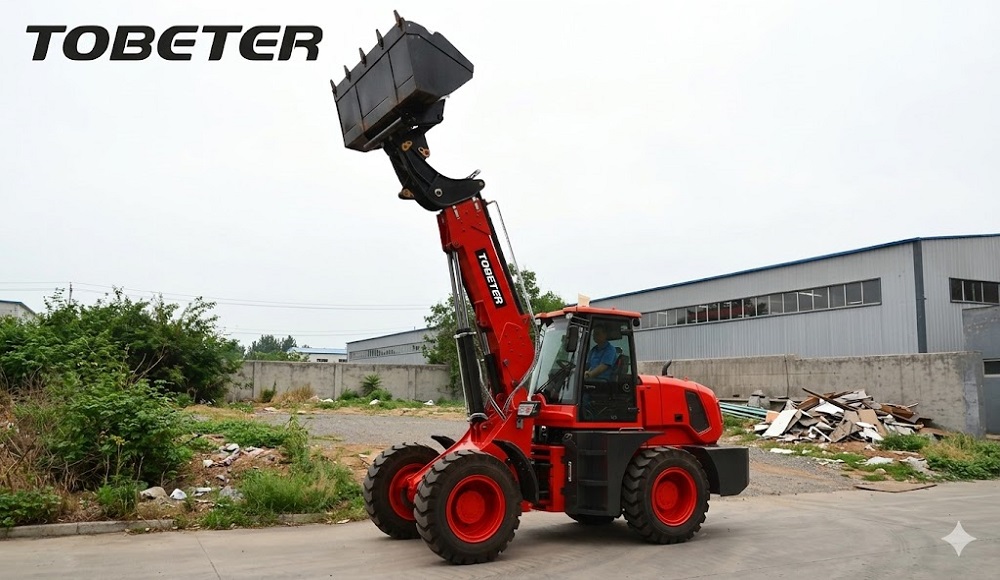
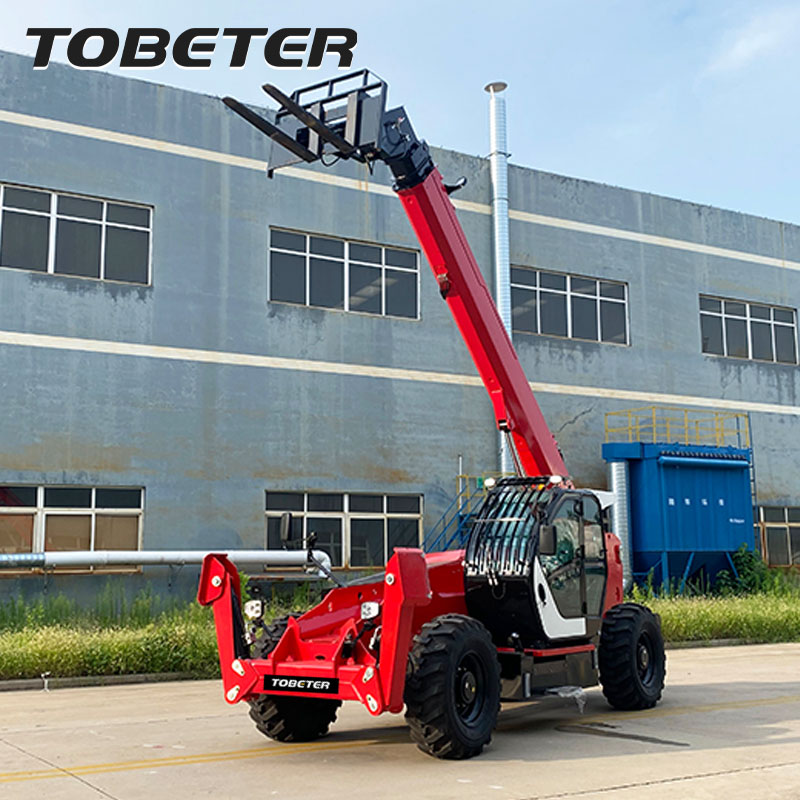
A telehandler is a powered machine with a telescoping boom (or arm) that can be extended horizontally and vertically from the base of the vehicle. By allowing operators to lift, move and place loads more accurately from various elevations, telehandlers provide a great deal of flexibility at construction job sites. Telehandlers have capabilities that conventional forklifts simply do not possess. Conventional forklifts use fixed spike masts; however, telehandlers also have horizontal capability in addition to verticality, thereby allowing for accessibility above and below items located at an elevated level or in a difficult-to-access location.
The three main components of a telehandler are:
• The telescopic boom – It is the primary characteristic to a telehandler that allows operators the ability of either extending/retracting the boom to access elevated locations or move loads horizontally.
• The chassis and drive system – telehandlers are designed with a heavy-duty, rugged all-terrain chassis that permits four-wheel drive capability and four-way steering to allow for safe movement across uneven job sites.
• The attachment interface – Because the telehandler's boom can accept many different attachments, it can easily transition from a forklift into a loader, crane, or work platform.
Telehandlers are produced in varying sizes and lifting capabilities. Most telehandlers typically lift anywhere from 1100 to 5440 kilograms (2500-12000 pounds) and afford operators a maximum height of anywhere between 2 to 6 meters (6-18 feet). The diversity of these machines provides for the hiring of telehandlers specific to nearly every construction-related application.
• Compact telehandlers - Are made for high maneuverability in tight urban and/or indoor environments with a small footprint.
• High-reach telehandlers - Provide exceptional capability for lifting large or heavy loads to upper floors of buildings in the construction industry.
• Rotating telehandlers - Use a rotating turret to provide the ability to lift and rotate loads at any angle, without having to move the entire chassis. Thus, increasing the overall efficiency of the telehandler.
The construction industry is the largest single customer of telehandlers; however, telehandlers are also used extensively within agriculture; industrial material handling; and logistics. For example, farmers use telehandlers to move hay bales, while warehouses and industrial environments utilize telehandlers for their lifting and reach capabilities to stack and transport heavy items.
Telehandlers excel at being multiple pieces of equipment in the same machine. Thanks to the many different attachments that telehandlers can use, one telehandler can do jobs that, under conventional circumstances, would require three different pieces of equipment.
Forks can be used to raise, carry, or transport pallets and other flat objects (e.g., packaged goods). Buckets can be used for loading and unloading bulk materials, including dirt, sand, and gravel. Jib attachments can be used to lift large, bulky, or oddly shaped items such as roof trusses.
Telehandlers can serve as a combination forklift/rough-terrain loader/small crane all at the same time and save on the cost of purchasing three pieces of equipment by consolidating their use into a single telehandler. Telehandlers will streamline the workflow, reduce downtime, and provide increased efficiency at the job site when using multiple types of machinery.
The telehandler is a piece of equipment designed with a telescoping boom, enabling it to offer some versatility that standard forklift trucks do not have. A standard forklift truck only allows for vertical movement, while a telehandler can move forward and upward. This gives the operator the ability to lift items over an obstacle or onto multiple floors of a structure.
The ability to extend the boom is also helpful because the operator can place items exactly where they need to be, even if there is an obstacle in the way (e.g., walls, fences). In cases where there are crowds, work sites that have many different items and layers, repositioning a crane or a forklift to reach materials is often not practical, and the telehandler provides a safer approach to handling this kind of obstacle.
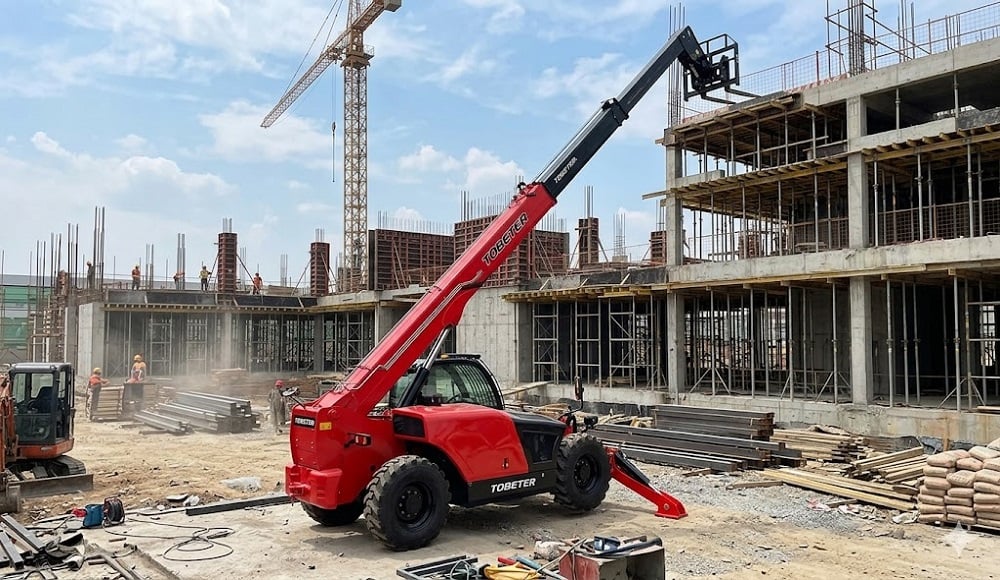
Telehandlers are typically used for vertically lifting pallets of materials such as bricks and steel beams, HVAC systems, etc., from below grade (ground) to elevated heights (upper stories) during construction on multi-story building projects. The use of a telehandler's vertical lift capability means there is no longer a requirement for scaffolding or any other type of support frame.
Using a telescoping boom, telehandlers provide heightened accuracy/control which provides many benefits, including: Placement of pallets to the upper floors of a structure without impacting the lower floors; Accurate placement of roof trusses to with a millimeter of tolerance; and Installation of large mechanical devices such as HVAC Systems or Generators with a high degree of accuracy.
The combination of horizontal reach, vertical lift, and precision offered by the telehandler allows it to be used as a versatile piece of equipment. One telehandler can perform many different types of complex tasks that otherwise would have required multiple specialized pieces of equipment.
Telehandlers have played an integral role in improving productivity and efficiency at construction sites. There are a variety of ways telehandlers improve jobsite productivity, such as:
• Speed – Telehandlers have a greater speed than other types of construction equipment, so they can transport materials faster, and hence with less time spent in transport.
• Access – The reach of the telehandler avoids requiring an operator to reposition the machine to transport materials repeatedly.
• Ability to work in Limited spaces – Some telehandler models are designed to operate in tight spaces, including narrow lanes, indoor construction sites, and up and down stairs.
• One operator can do many things – When using different attachments, the telehandler operator can complete tasks that may have previously needed a team using multiple machines.
• Consolidation of tasks and reducing the number of machine moves allows for quicker project completion and greater labour efficiency.
Telehandlers increase efficiency, while decreasing the number of times materials are moved onsite; therefore, Contractors have overwhelmed their ability to produce with fewer man-hours and resources and have saved both by using telehandlers to complete projects more quickly, thereby reducing contractor costs as well as accelerating project completion timing.
Return on Investment (ROI) and cost performance of telehandlers toward providing productivity versus an investment have proven to be beneficial to Contractors as an investment. Investing in one telehandler versus buying multiple pieces of telehandler equipment will yield significant savings as a contractor will utilize one piece of equipment to perform multiple functions of a telehandler, instead of buying three types of separate equipment, resulting in savings in capital expenditures as well as ongoing maintenance costs associated with each telehandler. Telescopic boom forklifts allow contractors to have the functionality of three different types of equipment: Forklifts, Loaders, and mini Cranes; thus reducing the cost of the equipment as well as reducing the ongoing maintenance costs associated with the other equipment used to perform the same type of functions that a telehandler provides.
If you use fewer machines, your service contracts will also be minimized. There will also less downtime and lower maintenance costs. Today's telehandlers have been designed with fuel-efficient engines, which can reduce your fuel expense when operating a large project. The telehandler also holds a high resale value and has a long service life, making it very appealing to contractors and rental companies.
If a contractor is managing multiple jobs, investing in a telehandler can be a great return on investment as it provides the flexibility to perform many tasks and eliminates the transportation requirements of moving multiple pieces of equipment from one job to another.
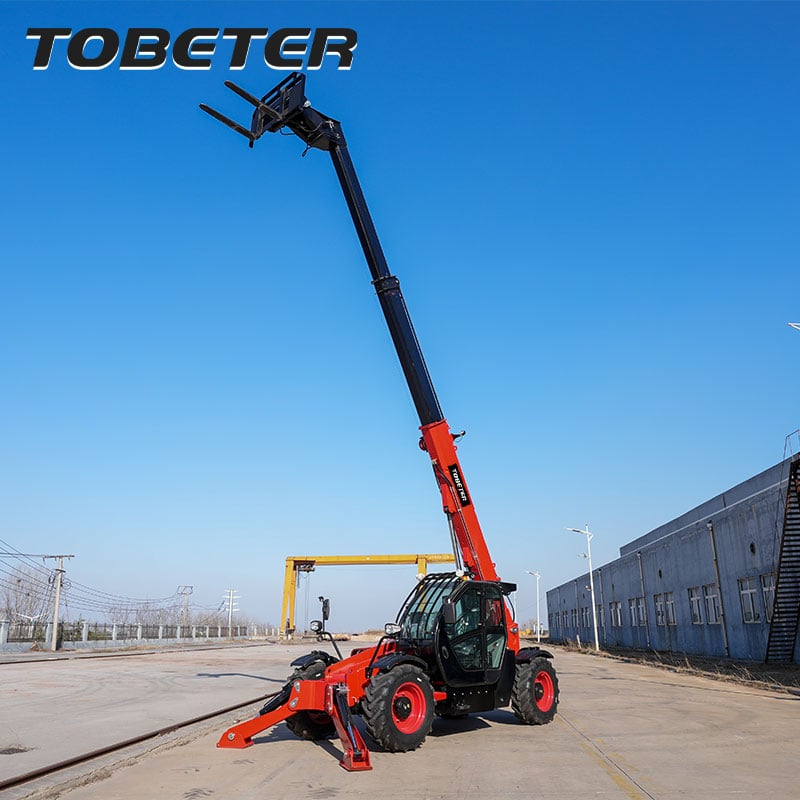
Telehandlers are the epitome of a jobsite MVP because of their superior performance and value.
They are:
• Versatile – Telehandlers can provide different attachments for multiple applications, which allows them to replace numerous pieces of equipment.
• Efficient – Telehandlers can handle materials quickly and easily, move around the site quickly and easily, and can function in confined and uneven areas.
• Safe – Telehandlers come equipped with stability systems, load monitoring systems, ergonomic joysticks, etc. that help reduce the chance of an accident.
• Cost-Conscious – The low ownership, maintenance, and fuel expense of telehandlers, combined with their long service life provide excellent ROI.
A telehandler is a tool and represents how we do things in construction. It combines the elements of speed, safety, functionality and therefore sets new standards for both efficiency and reliability within the industry.
A construction site is an extremely complex environment requiring equipment that can adapt to the varying conditions & requirements within the site. For this reason, the Telehandler has developed a reputation for being the MVP for construction sites because of its versatility, lifting capacity, productivity and cost effectiveness as compared to the traditional methods (e.g., cranes). Through using telehandlers instead of several other pieces of equipment, there is reduced labor cost, and contractors can finish their projects faster and safer than ever before.
The construction industry continues to evolve, and the telehandler is an integral component of this evolution. The telehandlers offered by Tobeter exemplify the evolution of telehandlers and will continue to set the standard for premium value and superior quality in the telehandler market. The telehandler will be a critical partner in helping contractors, operators, and project managers achieve the highest levels of efficiency, safety, and success.