EN
EN

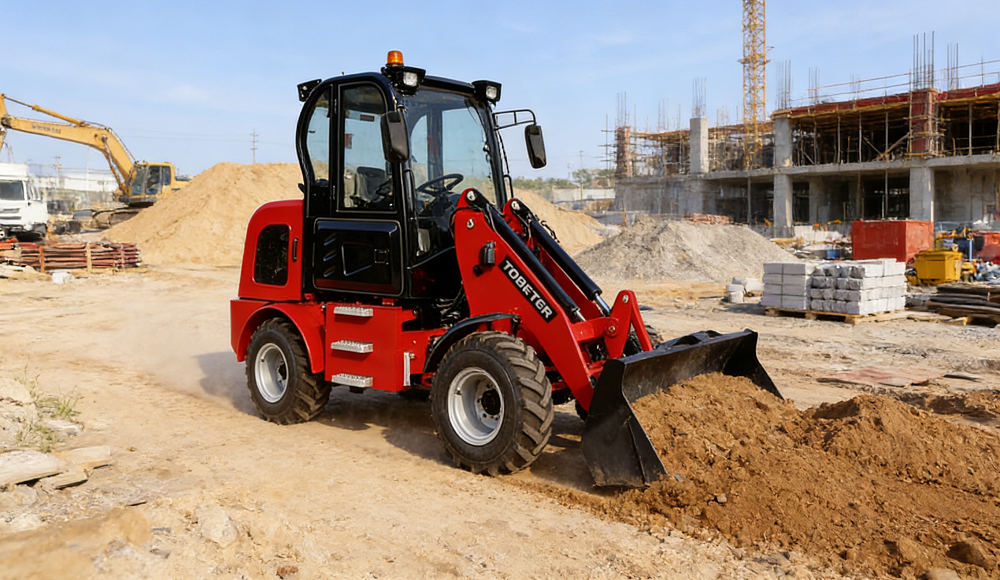
In the rapidly evolving landscape of 2026 construction and landscaping, the compact articulated wheel loader has emerged as the definitive solution for operators who refuse to compromise. For years, the industry forced a choice: you could have the raw power and stability of a large loader, or the nimble footprint of a walk-behind unit.
At TOBETER, we believe that true efficiency lies in the "pivot." By utilizing a central articulation joint, these machines do not just turn; they adapt. This design creates a harmony between stability and agility that is transforming how we approach urban job sites, agricultural barns, and sensitive residential landscapes.
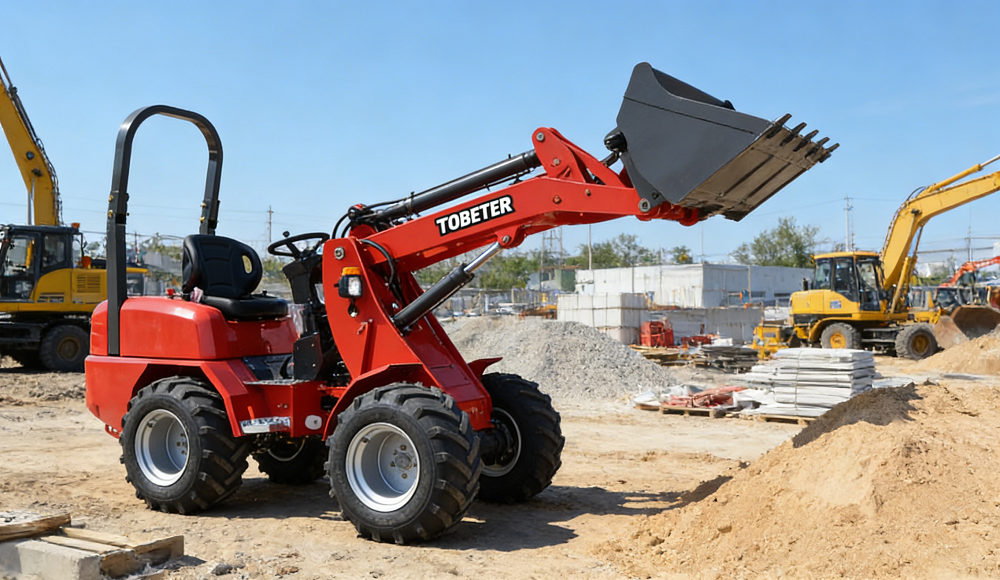
The most striking feature of an articulated loader is its "waist." Unlike a skid steer, which must drag its tires across the ground to change direction, an articulated loader pivots at a central hinge. This engineering choice has profound implications for site performance.
When an articulated loader turns, the rear wheels follow the exact path of the front wheels. This "true-path" tracking is a game-changer when navigating narrow garden gates or winding cemetery paths. If the front bucket clears an obstacle, the operator can be certain the rest of the machine will follow without clipping a fence post or a stone wall. This reduces operator stress and virtually eliminates the "tail swing" accidents common with rigid-frame machines.
In 2026, client expectations for property protection are higher than ever. Because the wheels on an articulated loader roll through a turn rather than skidding, the machine is incredibly "turf-friendly." You can drive across a wet, established lawn, perform a 90-degree turn, and exit without leaving a single black mark or torn patch of grass. This "zero-scrub" movement saves contractors thousands of dollars in site restoration costs and allows for year-round operation in weather that would ground a skid steer.
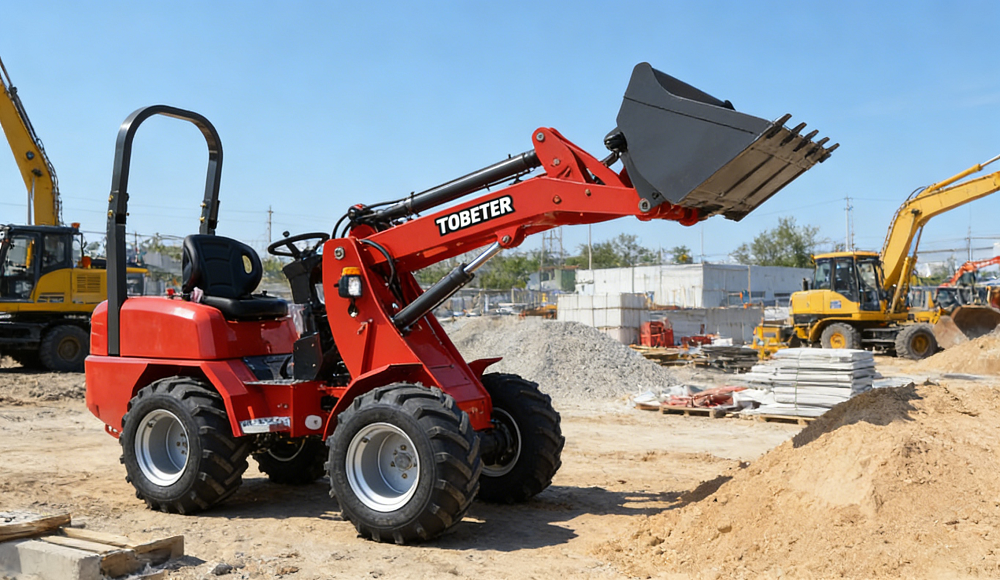
A common misconception is that a smaller machine is inherently less stable. However, the compact articulated loader challenges this by keeping its weight where it matters most: close to the ground.
At TOBETER, our loaders often feature an oscillating articulation joint. This allows the front and rear halves of the machine to tilt independently. When one wheel hits a rock or a curb, the other three remain firmly planted on the ground. This constant four-point contact ensures that the machine maintains its traction and "footing" on uneven terrain, preventing the "tippy" sensation often felt in smaller rigid machines.
By placing the heavy hydraulic components and engine low in the chassis, these loaders maintain a high Tipping Load relative to their width. For example, a machine only 48 inches wide can often carry a pallet of sod weighing over 1,500 lbs. This balance of a narrow footprint for accessibility and a low center of gravity for safety allows operators to work confidently on slopes or when lifting loads to maximum height.
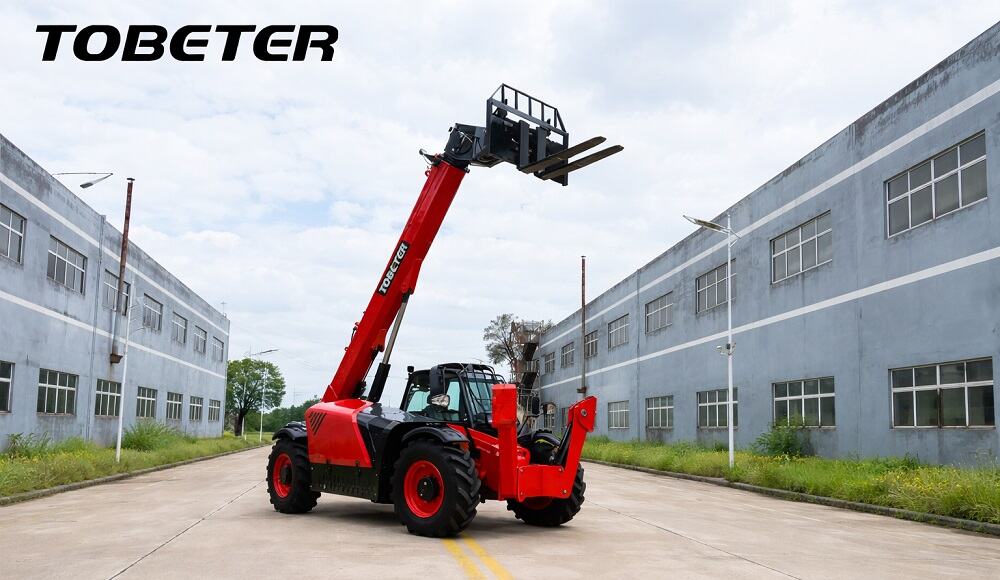
The "Agility meets Stability" story in 2026 is incomplete without mentioning the telescopic boom. Traditional loaders are limited by their lift-arm geometry, but many modern compact articulated loaders now feature a boom that extends outward.
This feature allows a compact machine to perform the work of a much larger unit. You can reach over the side of a high-sided dump truck to dump a load of mulch, or place a pallet of pavers across a wide trench. Because the boom is centered on the articulated joint, the machine remains balanced even when reaching forward, providing a level of "place-and-carry" precision that was once only possible with a dedicated telehandler.
For the 2026 season, these three models represent the peak of compact articulated engineering, balancing transportability with heavy-duty performance.
The Bobcat L28 is the benchmark for the "turf-friendly" professional. It features a telescopic boom and a dual-path cooling system that allows it to work in high-debris environments like forestry or hay sheds without overheating. It is light enough to be towed by a standard pickup, making it the ultimate tool for mobile landscaping crews.
If your priority is pure lifting power in a compact frame, the Kubota RT220-2 offers heavy-duty axles and an impressive rated operating capacity. Its hydrostatic transmission provides smooth, "inching" control, which is essential when placing delicate stone or nursery stock in tight quarters.
For the modern urban contractor, the Volvo L25 Electric provides the ultimate in stability and quiet operation. With zero emissions and near-silent hydraulics, it allows for "night-shift" work in noise-sensitive residential areas while offering the same breakout force as a diesel equivalent.
The compact articulated loader is more than just a piece of equipment; it is a philosophy of site management. By choosing agility and stability over sheer size, you protect your client's property, increase your operator's safety, and finish jobs faster with less manual labor. At TOBETER, we believe this is the most versatile "iron" you can add to your fleet.