EN
EN

Modern agriculture is no longer defined solely by manual labor and traditional machinery. As farms scale up and operational demands increase, efficiency, flexibility, and safety have become essential. Among the machines transforming agricultural productivity, the agricultural telehandler stands out as one of the most versatile and valuable pieces of equipment. Often described as a “farmhand that never tires,” it combines the functions of a forklift, crane, and loader into a single powerful machine.
For manufacturers like Tobeter, which specialize in construction and heavy equipment, understanding the role of telehandlers in agricultural settings highlights how multi-functional machinery is reshaping modern farming operations.
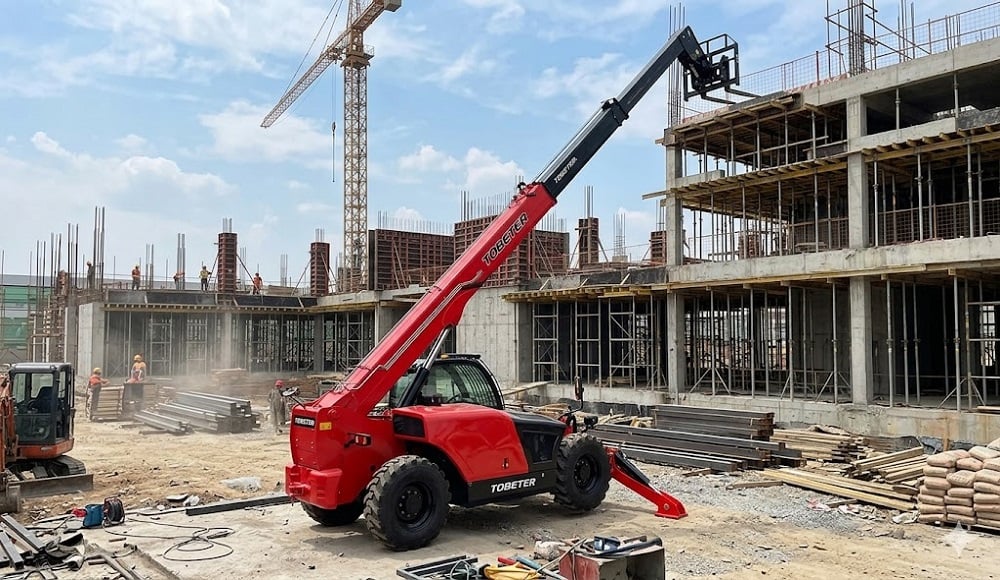
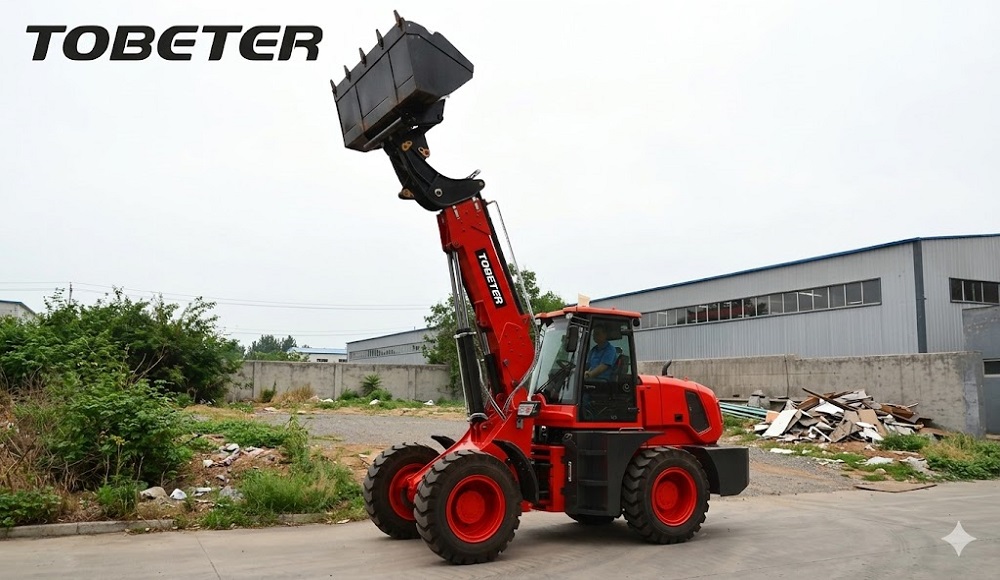
An agricultural telehandler (short for telescopic handler) is a machine equipped with a telescopic boom that can extend forward and upward, allowing it to lift, move, and place materials at heights and distances that conventional loaders cannot reach. It can be fitted with various attachments such as buckets, pallet forks, bale clamps, and lifting hooks, making it suitable for a wide range of farm tasks.
Unlike standard forklifts or tractors, the telehandler’s key advantage lies in its reach and adaptability. This makes it indispensable on farms where diverse workloads and challenging terrains are common.
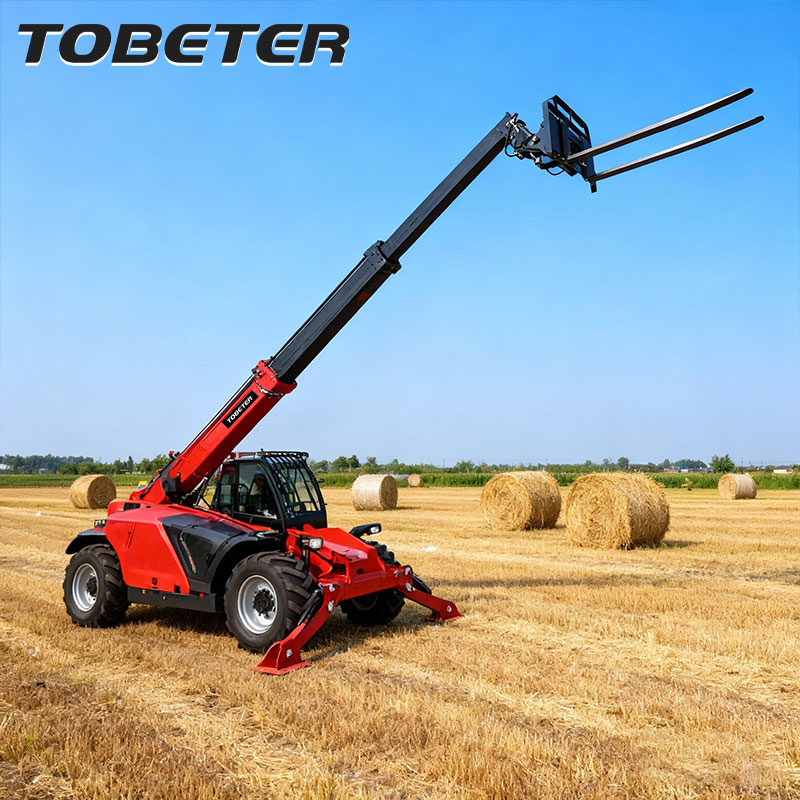
One of the most significant advantages of an agricultural telehandler is its versatility. Instead of relying on multiple machines for different tasks, farmers can use a single telehandler for a wide range of applications.
It can load and unload feed, transport pallets of seeds or fertilizers, stack hay bales, and even assist in construction or maintenance work around the farm. With quick-attach systems, operators can switch between attachments in minutes, reducing downtime and increasing productivity.
This adaptability makes the telehandler an all-season machine, capable of supporting daily farm operations throughout the year.
Time is a critical factor in agriculture, especially during planting and harvest seasons. A telehandler significantly improves operational efficiency by reducing the need for manual labor and multiple machines.
Its ability to travel over rough terrain and reach elevated storage areas allows tasks to be completed faster. For example, stacking hay bales in high storage barns or loading grain into elevated silos becomes a smooth and quick process.
By streamlining material handling, farms can reduce labor costs while increasing overall output, making the telehandler a strong return-on-investment asset.
Unlike traditional loaders, telehandlers are designed for height and reach. The telescopic boom allows operators to extend loads forward and upward, which is especially useful in large-scale farming environments.
This capability is essential when working with tall storage facilities, stacking materials in tight spaces, or reaching over obstacles. It also enhances precision, enabling operators to place loads exactly where needed without repositioning the machine repeatedly.
Safety is a top priority in agricultural environments, where heavy loads and uneven terrain increase the risk of accidents. Telehandlers are designed with stability systems, load indicators, and advanced hydraulic controls to ensure safe operation.
By reducing the need for manual lifting and minimizing repetitive strain injuries, telehandlers create a safer working environment for farm workers. Operators also benefit from improved visibility and ergonomic cabin designs, which further enhance operational safety.
While purchasing multiple machines for different tasks can be expensive, a telehandler offers a cost-effective alternative. Its multifunctional design means that one machine can replace several specialized pieces of equipment, reducing both capital investment and maintenance costs.
Fuel efficiency and reduced labor requirements also contribute to long-term savings. For medium and large-scale farms, this consolidation of equipment leads to more streamlined operations and better financial management.
Agricultural environments are diverse, ranging from flat crop fields to uneven livestock farms and mountainous orchards. Telehandlers are built to handle these conditions with ease.
Many models feature four-wheel drive and robust suspension systems, allowing them to operate smoothly on muddy, rough, or sloped terrain. This adaptability ensures that farmers can rely on a single machine regardless of seasonal or geographical challenges.
The agricultural telehandler has become an essential asset in modern farming, combining power, flexibility, and efficiency in one machine. Its ability to perform multiple roles—from lifting and loading to transporting and stacking—makes it a true all-in-one solution for agricultural operations.
For equipment manufacturers like Tobeter, the growing demand for versatile machinery such as telehandlers reflects a broader industry shift toward multifunctional, cost-efficient, and productivity-driven solutions. As agriculture continues to evolve, machines like the telehandler will play an increasingly important role in shaping the future of farming.