EN
EN

Operating heavy construction equipment is a responsibility that requires technical knowledge, situational awareness, and adherence to safety standards. Excavators, backhoe loaders, wheel loaders, bulldozers, cranes and other construction machines are powerful tools that are able to lift very heavy loads and do very complex tasks. However, without training and certification, these types of platforms present a significant risk.
The safety certifications of heavy equipment operators are not just a regulatory requirement — they demonstrate that an operator is a competent professional, assists in preventing workplace accidents, protects your investment in equipment, and increases the overall efficiency of a project. As new equipment manufacturers such as TOBETER are building more advanced pieces of machinery that are high in performance, the need for qualified operators becomes increasingly important.
This complete guide will cover the reasons for an operator to receive certification, define the types of certifications available, describe the current regulatory environment for operator certification, what training an operator needs to receive, and what best practices can be followed to continue to maintain safety standards while using heavy equipment in today's work environment.
The Importance of Safety Certification
One of the principal reasons to have a safety certification for an operator of heavy equipment is that accidents can cause major injuries, death, property loss, and delay in the completion of a construction project. Global safety statistics for construction show that equipment accidents are one of the leading causes of workplace injuries in construction and manufacturing industries.
Certification helps ensure an operator:
Understand machine controls and functions
Recognize jobsite hazards
Follow proper operating procedures
Perform daily inspections
Respond effectively to emergency situations
In addition to compliance, certified operators will allow for lower insurance premiums, increased productivity, and a longer life of your equipment. When operating sophisticated modern machines, such as today’s all-purpose loaders and excavators built for maximum efficiency with hydraulic precision, manufactured by TOBETER, properly trained operators are able to maximize the performance of these machines while minimizing the risks.
Regulatory Frameworks Related to Operator Certification
Across all over the world, there are regulatory frameworks that regulate how operators will receive certification as an operator to safely operate equipment.
For example, in the USA, OSHA (Occupational Safety and Health Administration) creates safety standards for construction or industrial operations. OSHA requires employers to ensure operators have received proper training and are competent to use heavy equipment before they operate it.
While requirements may differ across the globe, the underlying principle is that operators must demonstrate an understanding of theory and practical experience before they can independently use heavy machinery.
Core Types of Heavy Equipment Certifications
Heavy equipment is normally specific to the equipment operator's certification as it relates to the equipment being used.
Excavators are widely used for trenching, digging, grading, and demolition. Certification focuses on safe operation, load control, ground stability assessment, and hazard identification.
Operators must demonstrate proficiency in:
Hydraulic controls
Safe trenching techniques
Stability management
Blind spot awareness
Backhoe loaders combine front-loading and rear digging functions. Certification requires understanding of dual controls and operational transitions.
Operators must be trained in:
Loader bucket operations
Backhoe digging techniques
Safe transport positioning
Stabilizer deployment
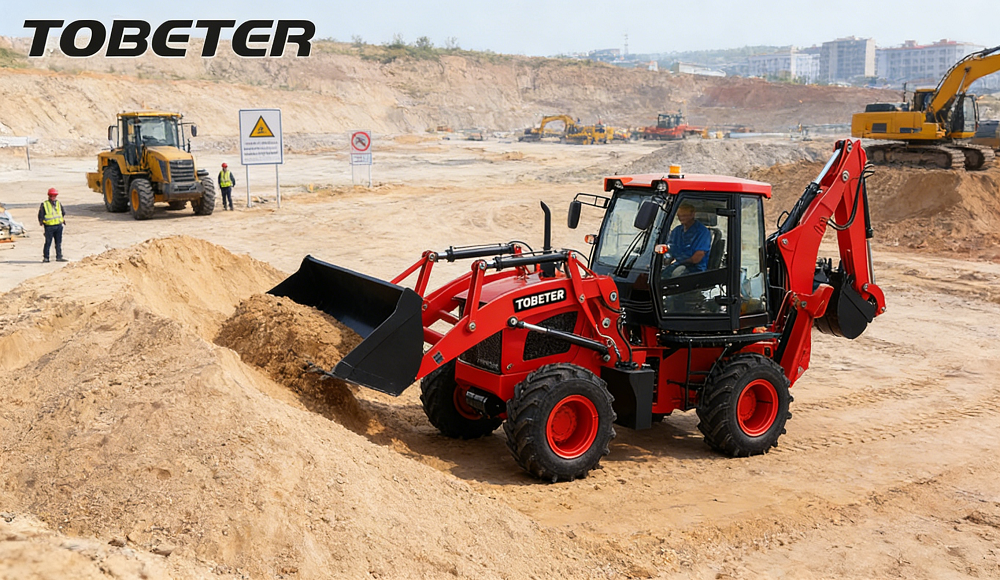
Advanced backhoe loaders, including those produced by TOBETER, integrate improved hydraulic systems and ergonomic controls. Certified operators are trained to use these features efficiently and safely.
Wheel loaders are used for lifting and transporting materials. Certification emphasizes load capacity limits, safe maneuvering, and tipping risk prevention.
Operators must understand:
Load distribution principles
Safe slope operation
Proper bucket positioning
Site traffic management
Cranes require specialized certification due to high-risk lifting operations. Certification typically includes load chart interpretation, rigging knowledge, and signaling procedures.
Crane certification is often more stringent than other equipment categories because of the complexity and risk associated with lifting heavy loads at height.
Bulldozers and graders require training in grading techniques, soil movement, and safe operation on uneven terrain.
Operators must demonstrate:
Blade control precision
Terrain assessment
Safe reversing procedures
Awareness of underground utilities
Certification programs generally include both theoretical and practical components.
Theoretical training covers:
Safety regulations
Equipment components
Hazard identification
Environmental considerations
Emergency response procedures
Operators learn how machinery systems function, including engines, hydraulic systems, braking systems, and control mechanisms.
Hands-on training allows candidates to operate machinery under supervision. Instructors evaluate:
Control precision
Situational awareness
Compliance with safety protocols
Proper inspection procedures
For example, operating a TOBETER backhoe loader during training involves demonstrating proper stabilizer setup, controlled digging, smooth loader operation, and safe shutdown procedures.
Certification requires passing both written and practical examinations. Written tests assess knowledge of regulations and operational theory. Practical exams evaluate real-world machine handling skills.
Only candidates who demonstrate full competency receive certification.
Employers play a central role in ensuring operator certification compliance. Regulatory agencies typically require employers to verify operator qualifications before allowing independent operation.
Employer responsibilities include:
Providing certified training opportunities
Maintaining records of operator credentials
Conducting refresher training
Ensuring proper supervision
Enforcing safety protocols
Employers must also ensure that operators are trained on the specific equipment models used on-site. Even certified operators require orientation when transitioning to different machinery models or manufacturers.
For example, transitioning to newer-generation TOBETER equipment with enhanced hydraulic responsiveness or digital monitoring systems may require additional familiarization training.
Certification is not always permanent. Many jurisdictions require periodic recertification, typically every three to five years.
Refresher training ensures operators stay updated on:
Regulatory changes
Technological advancements
Updated safety protocols
New machine features
Continuous training reduces complacency and reinforces safe operating habits.
Modern heavy equipment incorporates advanced features such as electronic control systems, telematics, fuel optimization technologies, and enhanced safety mechanisms.
Manufacturers often provide model-specific training to ensure operators understand these features.
TOBETER, for example, emphasizes durable design and efficient hydraulic systems in its equipment. Proper training ensures operators:
Utilize hydraulic controls efficiently
Maintain optimal fuel usage
Conduct correct daily inspections
Identify early signs of wear
Manufacturer-supported training enhances both safety and equipment lifespan.
Certification programs focus on mitigating common jobsite hazards, including:
Equipment rollovers
Struck-by incidents
Collisions with workers or vehicles
Electrical hazards
Trench collapses
Overloading
Understanding these risks allows operators to proactively prevent accidents.
Proper training teaches operators to:
Assess ground stability
Maintain safe operating distances
Use seat belts and protective systems
Follow communication protocols
Safety certification is often perceived solely as a compliance requirement, but it also improves productivity.
Certified operators:
Work more efficiently
Reduce downtime caused by accidents
Minimize equipment damage
Maintain smoother project workflows
Well-trained operators handle machines with precision, reducing unnecessary wear and mechanical stress.
High-quality equipment—such as durable backhoe loaders and wheel loaders from TOBETER—performs best when operated by skilled professionals who understand machine capabilities and limits.
Certified operators reduce legal and financial risk. In the event of an accident, certification demonstrates due diligence and regulatory compliance.
Insurance providers often consider training and certification records when determining premiums. Companies with strong safety programs may benefit from lower insurance costs.
Failure to comply with certification requirements can result in:
Fines
Legal liability
Project shutdowns
Reputational damage
Certification alone is not sufficient. A comprehensive safety culture requires ongoing commitment from management and operators alike.
Effective safety culture includes:
Regular safety meetings
Open communication
Incident reporting systems
Continuous improvement initiatives
When equipment manufacturers like TOBETER design machines with operator safety in mind—through ergonomic cabins, stable chassis design, and reliable braking systems—these engineering features complement operator training programs.
Safety is strongest when training, regulation, and machine design align.
The heavy equipment industry is evolving rapidly. Automation, electric machinery, and digital monitoring systems are changing operator responsibilities.
Future certification programs may increasingly include:
Telematics system management
Remote operation training
Electric equipment safety
Advanced diagnostic skills
As technology advances, certification standards will continue adapting to reflect new operational realities.
Summary
The process of certifying an operator of heavy machinery is necessary in order to comply with safety regulations, preserve the safety of employees, and achieve maximum performance from the use of equipment. Certification programs provide both theoretical and practical knowledge/skills on how to operate excavators, backhoe loaders, wheel loaders, cranes and other heavy machinery in a safe and efficient manner. Employers need to make certification programs a priority, maintain accurate training records and support continuous education and learning. Operators need to remain diligent, continue to update their skills, and follow safety protocols.
Equipment manufacturers too must produce machines that are safe, efficient, and durable. Even though an equipment manufacturer produces a machine that is engineered with safety and durability in mind, the operator must be a certified operator in order to realize the full potential of the machine. In the challenging environments of construction, mining, or industrial operations, safety certification for operators is not simply a regulatory compliance; it is a professional standard to protect lives, increase productivity, and help create a sustainable business.