EN
EN
The global construction and mining sectors do not begin their undertaking of moving an excavator, bulldozer, wheel loader or backhoe loader until the logistics planning occurs. Because of the complexities involved with moving such large and heavy equipment, the coordination and management of these haulages must be performed with precision engineering, compliance with government regulations and an unwavering commitment to safety as the highest priority.
At TOBETER, we are a global leader in excavator solutions. Our mission and commitment is to develop maximum value for our customers while concurrently building a sustainable future together. We believe that the value of any world class machine is only realized when that machine is on-site, operational and safe. We therefore consider the transportation of machinery not as a component of delivery, but as an extremely important phase of the success of your project. This professional guide addresses the heavy equipment logistics standards in 2026 so that you can have confidence that your fleet will arrive ready to perform.
I. Logistics Blueprint
Professional logistics planning is a process that begins well before the equipment is picked up and loaded onto a truck. The success of a heavy haulage depends upon the use of accurate information and planning to establish a proper logistics process.
1. Weight and Dimensional Accuracy: In heavy haulage, one inch can mean the difference between a successful delivery and a bridge strike that ends a career. Therefore, it is important to provide accurate height, width, length and weight of your equipment at all times and include your attachments. TOBETER designs equipment to provide clearly defined transport dimensions to assist our clients.
2. Route Surveying/Scouting: With increased construction activity on the rise in 2026, infrastructure will have greater demands than any other time in history.Professional Logistics Experts conduct Route, with a focus on chokepoints (weight-restricted bridge, low utility lines, and narrow urban corridor) in order to recognise choke points before delivering, thus avoiding high detours that could occur midway through delivery.
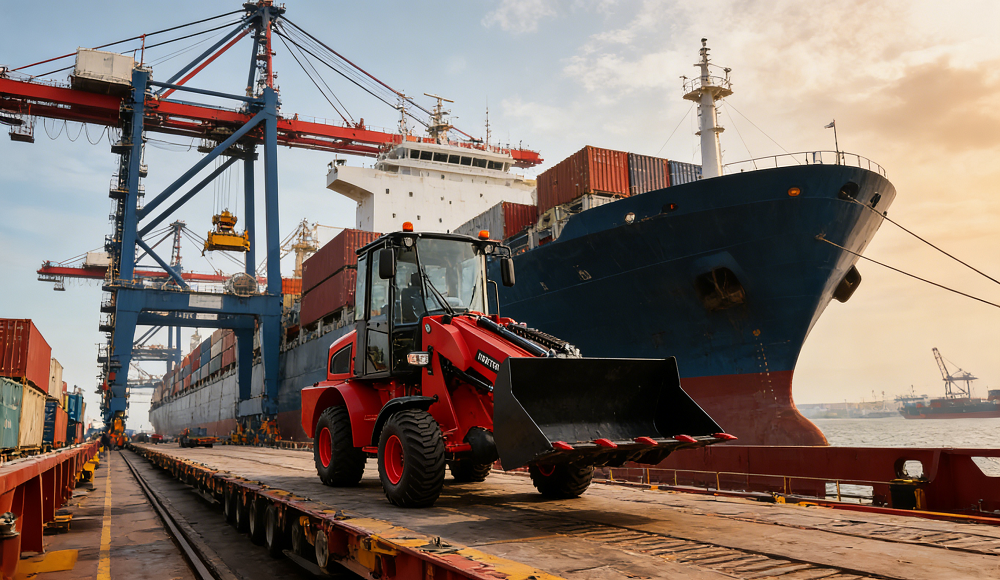
II. The Legal Framework of the Transport of Heavy Equipment
There are strict regulations governing the transport of heavy equipment on our roads, with compliance the best defence against hidden costs such as fines, delays and impounded loads.
Oversize and Overweight Permits: Most heavy machinery is larger than the maximum standard width of 8'6". Therefore, it will require unique permits, depending on which municipalities you will drive through with that load.
Superload Logistics: For any massive piece of equipment weighing more than 150,000 lbs. the carrier must obtain a "Superload Permit", that often requires a civil engineering study for the road surfaces and bridges along that route.
Escort Vehicles: Depending upon the overall width and length of a load, there could be a requirement for the use of pilot vehicles as part of the load transport. These pilot vehicles function as the eyes and ears of the driver, providing their driver with a warning regarding potential hazards, thus ensuring the safe passage through tight corridors.
III. The Most Important Part of the Delivery Process
The Loading Zone has been identified as statistically the most dangerous area of a job site. TOBETER recommends using a "Slow and Steady" Work Philosophy to reduce the risk associated with loading equipment onto the transport vehicle.
IV. Minimize risk of shifting loads.
Any attachment of an accessory component (attachments, buckets, blades, booms) should be secured to a trailer in a position that minimizes shifting loads. Trends are moving toward smart logistics and sustainability. At TOBETER, we are proud to be a leader in creating a sustainable future. Technology has improved the logistics industry by developing ways to reduce waste and environmental impacts.
Telematics uses new "smart sensor technologies" that are currently standard on new TOBETER heavy equipment. Telematics provide fleet managers with the ability to track both GPS and impact sensors and provide fleet managers with real-time notifications of load movements and unsafe vehicle operation. AI for route optimization helps transport providers choose routes to minimize the amount of fuel consumed and reduce stopping time and distance, thus reducing the overall carbon footprint of the transportation industry.
Biosecurity compliance is mandatory for all international shipments of machinery. The equipment must be pressure washed to eliminate the possibility of transmitting invasive species and is part of our commitment to preserving the global environment. The TOBETER Advantage is that our company understands that the brand of equipment used will make a difference in the logistics of transporting equipment. A leading manufacturer of construction equipment has a full understanding of the life cycle (from beginning to end) of their equipment.
V. Design Features of TOBETER Excavators
Accessible tie-down points
All tie-down points have been reinforced to make securing an easier and safer process.
Optimized dimensions of equipment
All retractable components of TOBETER heavy equipment have been designed to keep loads at or as close as possible to standard widths when transported.
Integrated Technology
All new TOBETER heavy equipment has integrated technology that guarantees a seamless transition of data from the manufacturing process to the user of the equipment on the job site.
Logistics connects the world-class equipment to the world-class project. By treating your machinery as an investment with care and detail, you can preserve your asset and maximize its time in your projects. TOBETER not only supplies you with the exact machine you require, but with the expertise to help you optimize your asset's value from the moment it is delivered to the completion of its work. Together, we can build a future of sustainability through safe delivery of the equipment and its use in projects.