EN
EN
The surface mining industry often measures productivity and profitability which is based on profit sales (tonnage) of product sold. Based on this information, we expect to see a paradigm shift in how we will load and haul starting in 2026. Historically, hydraulic shovels have been the premiere loading tools for loading from the face, but large wheel loaders (LWL) will start being seen as viable alternatives. They will provide improved efficiencies with faster mobility, lower capital cost and a reduced carbon footprint.
Choosing the appropriate loading tool is fundamental to success in mining. TOBETER wants to ensure that we will maximize the value of your operation by providing analysis on the loading equipment that delivers ore from the mine. This performance work will focus on how LWL's will become the "utility champions" of modern mines.
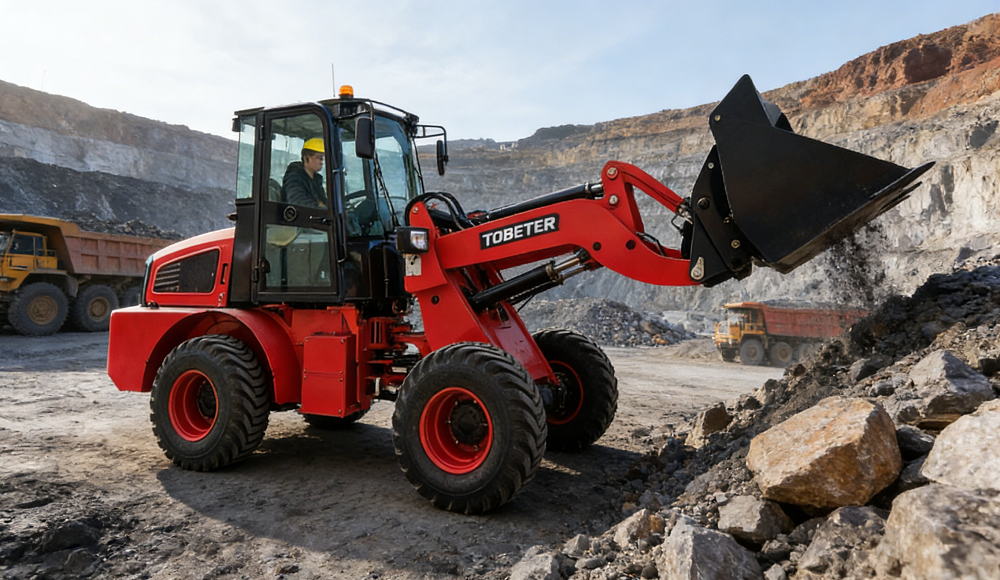
I. Strategic Shift From Shovels To Wheel Loaders
For many years, when using loading tools in the mining sector it has always been about the philosophy of "bigger is better". However, mine site designs now continue to be more and more dynamic.
1. Increased Mobility & Versatility
A hydraulic shovel is a piece of equipment that will only work in one area of the mine, whereas a wheel loader can travel up to 24 mph (38.6 km/h). This enables a single wheel loader to:
2. Capital Expenditure Efficiency (CAPEX)
Typically, a LWL will have a purchase cost approximately 1/3 of a hydraulic shovel with a similar bucket size. For mining companies looking to develop a sustainable future, lower purchase costs will decrease the amount of time between fleet makeup cycles and each piece of equipment will utilize the latest, most fuel-efficient internal combustion engine technology.
II. Performance Metrics - Anatomy of Performance
When analyzing the performance of mining-class wheel loaders, three primary metric areas will drive performance: payload accuracy, cycle time, and breakout force.
1. Payload Accuracy
Overloading a truck will create excess tire wear and structural damage. If a truck is underloaded, it causes wasted hours of work, taxi, and fuel cost; thus, every modern wheel loader is equipped with inboard scale systems to allow each loading operation to be optimized. The ultimate parameter will be called a "perfect match"; 4-5 passes should be the norm when loading a 250-ton truck.
2. Cycle Time Optimization
Because loaders work off of the Y-cycle, a wheel loader equipped with artificially intelligent hydraulic controls will simultaneously lift/tilt in one cycle. Fine-tuning the loader controls at the pile into breakout and reverse will provide estimated time savings to the load.
3. Breakout Force
The breakout force is the exact (measured) force exerted by a wheel loader when penetrating the shoulder of a shot. High breakout force will result from the diameter of the hydraulic cylinders and the Z-bar linkage geometry of the loader. If there is insufficient breakout force, then the wheel loader will spin, which will cause "bucket floor" wear and waste energy.
At TOBETER, our vision of a "sustainable future" is heavily tied to the digitalization of the mine site.
Autonomous Loading: In 2026, we are seeing the first widespread adoption of semi-autonomous loaders. The machine handles the complex "dig" phase automatically using LiDAR and radar, while the operator oversees the process from a remote station. This ensures consistent performance regardless of operator skill level.
Telematics for Longevity: Large wheel loaders now transmit thousands of data points per second. This "Predictive Performance" allows maintenance teams to identify a hydraulic pressure drop before it leads to a catastrophic failure, keeping the machine in the dirt for longer.
The large wheel loader is no longer just a support tool; it is a primary production engine. By offering the mobility to manage a complex mine site and the technology to reduce fuel burn, these machines are at the forefront of the industry's push toward efficiency.
At TOBETER, we are proud to provide the excavator solutions and industry insights that help you navigate these complex choices. Together, we are building a more profitable, sustainable, and powerful future for the mining industry.