EN
EN

The construction machinery sector is entering a new era with a significant moment ever since its began. As these changes happen, manufacturers of construction materials have started to develop new and innovative designs for heavy equipment due to demands by customers to be as environmentally friendly as possible, improve customers’ business profits, and find easier ways to work on construction job sites. The construction industry is seeing record levels of investment in infrastructure development, construction of new commercial buildings, and urban growth—putting pressure on manufacturers of construction equipment to stand out from competitors in the market. Due to this pressure and competition for construction piece of equipment to be the best possible in the marketplace, innovation is becoming one of the factors manufacturers use to attract customers.
The leading global manufacturers of construction equipment, as well as many developing manufacturers (e.g., TOBETER), are heavily investing in product development to create new features and performance levels associated with but not limited to the following: durability, fuel efficiency, operator safety, and intelligence of construction machinery. The purpose of this article is to provide the latest information on the innovations that will directly impact how construction machinery performs, as well as how those performance factors will be redefined over the course of several years.
One of the most transformative trends in construction equipment manufacturing is electrification. Governments worldwide are implementing stricter emissions regulations, prompting manufacturers to develop low-emission and zero-emission machinery. Electric compact excavators and loaders are increasingly common on urban job sites where noise and air pollution restrictions are strict. These machines reduce carbon emissions, minimize operating noise, and lower fuel costs. Hybrid systems are also gaining traction, combining traditional internal combustion engines with electric power to improve fuel efficiency without compromising power output.
In addition to electrification, manufacturers are developing engines with improved fuel injection systems, advanced combustion control, and optimized power management. These technologies significantly reduce fuel consumption while maintaining torque and lifting performance. TOBETER integrates fuel-efficient engine technology and optimized hydraulic systems into its equipment lineup, helping contractors reduce operational costs while aligning with sustainability objectives.
Hydraulic systems are the core of most heavy machinery. Innovations in hydraulic engineering have dramatically improved machine precision, lifting capacity, and fuel efficiency. Modern load-sensing hydraulic systems adjust fluid flow based on demand, reducing unnecessary energy consumption. Variable displacement pumps optimize hydraulic pressure and flow, ensuring smoother operation and improved responsiveness.
Enhanced hydraulic control also improves digging accuracy, which is particularly important in trenching, grading, and foundation work. For machines like backhoe loaders and excavators, refined hydraulic systems allow operators to achieve greater productivity with less fatigue. Manufacturers such as TOBETER focus on hydraulic efficiency to ensure stable performance in demanding construction and agricultural environments.
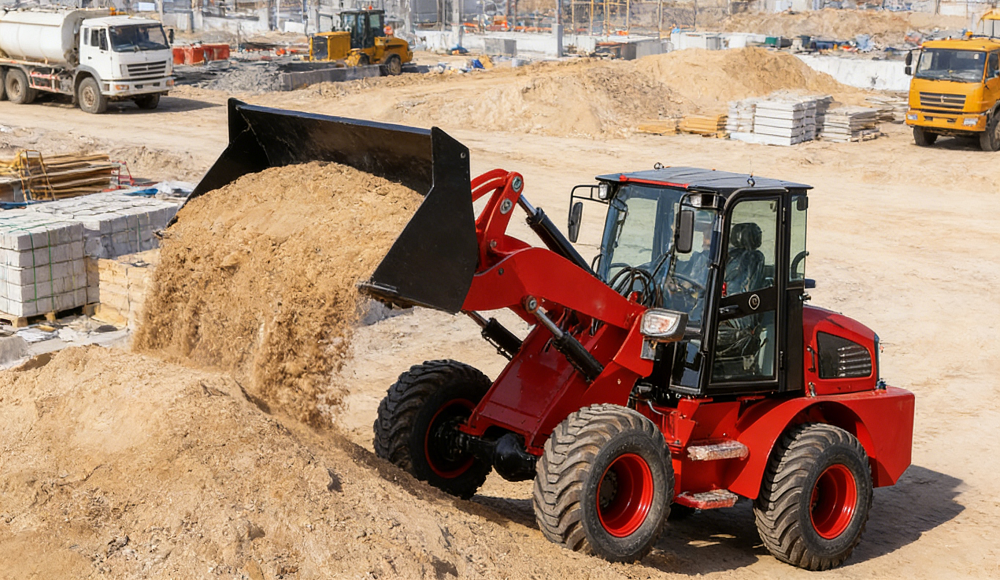
Automation and digital control systems are redefining equipment operation. Machine control technologies use sensors, GPS, and onboard computers to enhance precision and reduce human error. Grade control systems, for example, allow excavators and bulldozers to automatically maintain correct digging depth and slope. This reduces rework and improves project timelines.
Semi-autonomous features are increasingly integrated into heavy equipment. Automated steering, bucket leveling, and load monitoring systems improve operational accuracy and reduce operator fatigue. Fully autonomous mining trucks are already operational in some sectors, demonstrating the future direction of construction automation. As technology matures, automation will likely become standard across broader equipment categories. Manufacturers investing in smart systems, including TOBETER, are positioning themselves for a more connected and intelligent construction environment.
Telematics technology enables real-time monitoring of equipment performance. Modern machines are equipped with sensors that collect data on fuel consumption, engine health, operating hours, idle time, and location.
Fleet managers can access this information through cloud-based platforms, allowing them to:
Optimize fuel usage
Schedule preventive maintenance
Reduce downtime
Improve asset utilization
Predictive maintenance is one of the most valuable outcomes of telematics integration. Instead of reacting to mechanical failures, companies can identify potential issues before they become costly breakdowns. Telematics also enhances security by enabling geofencing and theft detection.
Construction machinery manufacturers, including TOBETER, recognize that digital fleet management is essential for improving operational transparency and reducing total cost of ownership.
Operator comfort and safety have become key innovation areas. Modern cabins are designed with ergonomic seating, climate control systems, vibration reduction technology, and intuitive control layouts. Large digital displays provide real-time machine data, allowing operators to monitor performance metrics easily. Touchscreen interfaces simplify machine diagnostics and control adjustments.
Visibility improvements—such as 360-degree camera systems and blind-spot monitoring—reduce collision risks. Enhanced lighting systems also improve safety during nighttime operations. By prioritizing operator-centered design, manufacturers improve productivity and reduce fatigue-related errors.
TOBETER emphasizes durable cabin construction and user-friendly control layouts to ensure safe and comfortable operation across long working hours.
Construction environments are harsh. Equipment must withstand heavy loads, abrasive materials, extreme temperatures, and continuous vibration. Manufacturers are now using high-strength steel alloys and reinforced structural designs to improve durability without significantly increasing weight. Computer-aided engineering simulations allow designers to test stress points before production.
Corrosion-resistant coatings and improved welding techniques further enhance equipment lifespan. Durability directly impacts resale value and long-term investment returns. Machines that maintain structural integrity over extended operating cycles offer better total lifecycle performance. TOBETER designs its equipment with reinforced frames and heavy-duty components to ensure reliability in demanding jobsite conditions.
Modern construction equipment is increasingly modular. Quick-attach systems allow operators to switch attachments rapidly, improving efficiency. Backhoe loaders and excavators can now accommodate a wide range of attachments, including augers, breakers, grapples, trenchers, and forks. This versatility reduces the need for multiple machines on-site.
Modular designs also simplify maintenance and part replacement, reducing downtime. Manufacturers investing in adaptable machinery increase customer value by enabling multi-purpose applications across construction, agriculture, and infrastructure projects.
Fuel remains one of the largest operational expenses in construction. Manufacturers are investing heavily in technologies that reduce fuel consumption without sacrificing performance. Eco-mode systems automatically adjust engine output to match workload requirements. Idle management systems shut down engines during prolonged inactivity. Improved transmission systems enhance power transfer efficiency. These innovations reduce operating costs and environmental impact simultaneously.
TOBETER integrates fuel optimization features into its equipment, helping contractors achieve cost-effective performance across diverse applications.
Safety remains a top priority in construction equipment innovation. Manufacturers are implementing advanced safety features such as:
Stability monitoring systems
Automatic load limitation
Emergency shut-off mechanisms
Anti-slip step designs
Enhanced braking systems
Load sensing and tilt detection technologies reduce rollover risks. Audible alarms and visual alerts warn operators of unsafe conditions. When combined with proper operator training, these features significantly reduce accident rates.
The future of construction is increasingly connected. Smart construction sites integrate equipment, project management software, and real-time analytics. Digital site mapping and 3D modeling enable precise machine guidance. Data integration improves coordination between teams and equipment.
Manufacturers are developing open-platform systems that allow equipment to communicate with project management tools. This level of integration increases efficiency, reduces material waste, and shortens project timelines. Emerging manufacturers like TOBETER are adapting to this digital shift by focusing on compatibility with modern monitoring and control systems.
Sustainability innovation extends beyond fuel efficiency. Manufacturers are rethinking production processes to reduce waste and energy consumption. Recyclable materials, remanufacturing programs, and lifecycle optimization strategies are gaining importance. Designing equipment for easier refurbishment extends usable life and reduces environmental impact. Water conservation and renewable energy use in manufacturing facilities are also becoming industry priorities. By combining durable engineering with efficient production methods, companies contribute to broader sustainability goals.
Innovation is no longer optional in construction machinery manufacturing. Companies that fail to adapt risk losing market share. Established global brands continue to lead in automation and electrification. At the same time, agile manufacturers such as TOBETER are advancing by focusing on fuel efficiency, durable construction, intelligent hydraulic systems, and cost-effective performance. Competition drives continuous improvement, benefiting contractors and project developers worldwide.
The next decade will likely bring even more transformative advancements. Artificial intelligence may enable fully autonomous construction sites. Electric heavy machinery will expand beyond compact models. Advanced materials may reduce equipment weight while increasing strength. Digital twins—virtual models of machines—could allow real-time performance simulation and predictive optimization. Manufacturers that embrace these trends will define the future of construction.
Conclusion
Innovation is transforming the construction machinery industry. The advancement of electrification and automation, telematics, hydraulic efficiency, and durable structural engineering is transforming the construction industry from traditional construction equipment to intelligent, durable, sustainable, and high-performing construction equipment. Manufacturers like TOBETER are helping to lead the evolution of intelligent, HI-performance, cost-effective, reliable hydraulic construction equipment. As technology evolves, the combined engineering innovation and practical application of job site performance will determine the industry's success.
Today, construction equipment is no longer measured merely on their power; instead, construction equipment can be defined by their intelligence, efficiency, sustainability, and reliability.