EN
EN

By 2026, most of the simple construction and mining sites are gone in the global community. With the growing number of connections in today's world, many new types of infrastructure projects will be located at the most challenging locations on our planet. Whether it be the permafrost in the Arctic Circle, the shifting sands in the Saharan Desert or the high peak of the Andes without enough oxygen, the environment will usually present more of a challenge than any of these deadline(s) have for completion of the project.
At TOBETER, a global leader in providing excavation solutions, we believe the best way for us to provide maximum value to our customers is to design our machines to perform under these extreme circumstances. By working together toward creating a sustainable world, we must build a fleet of machines that can perform well in an "over-engineered" way to be able to continue to make progress, regardless of how hot it is or what the topography is.
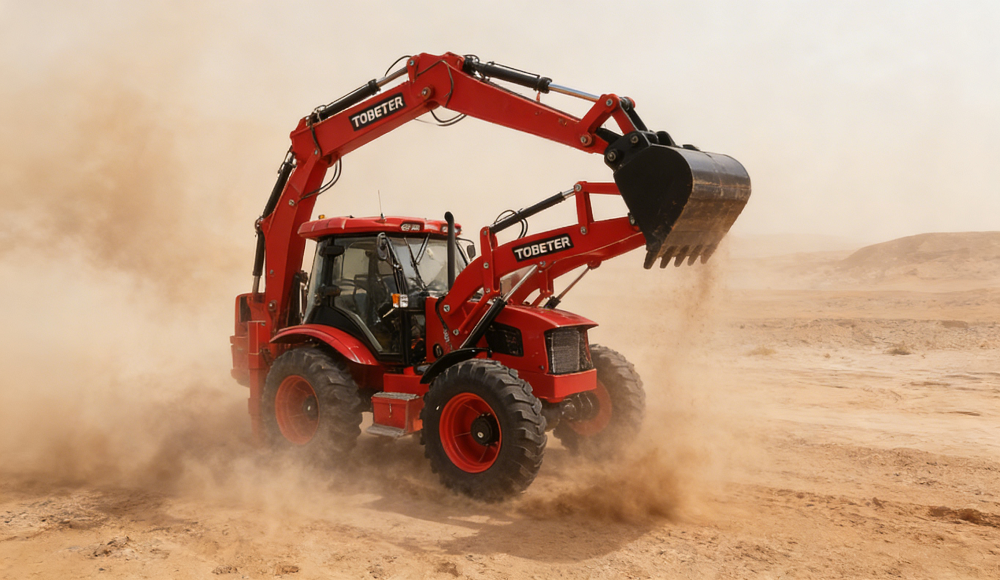
I. The Fire Test: Operations in High-Heat and Desert Climates
When operating heavy machines in areas with ambient temperatures greater than 50○C (122○F), it is not only uncomfortable for operators who have to use them; it becomes difficult to operate heavy machines due to the laws of thermodynamics.
1. The Design of the Cooling Architecture
Hydraulic fluid, or the "blood" of the excavators, will no longer have viscosity with hydraulic fluid at high temperatures, which could cause catastrophic parts failure and eventual reduced performance.
TOBETER's desert Spec equipment utilizes large volume oversized, high-efficiency cooling radiators and independent hydraulic fluid cooling circuits (high & low pressure). The separation of the engine's cooling system and the hydraulic system will keep the thermal spikes from one of the systems from compromising the other.
2. The Fight Against Highly Abrasive Dust
In the desert, dust is an understatement and it is essentially, "sanding paper" when in the air. The fine particles of silica can easily get around a standard filter causing scarring on cylinder walls and drastically shortening the life of turbo chargers on the excavators.
The TOBETER Defense: All our extreme-environment equipment has multi-stage centrifugal pre-cleaners. These pre-cleaners spin air at high speed, removing 90% of dust before it hits the primary filter. Plus we have pressurized double-sealed cabs so that operators breathe clean air, so they can work less and have better health.
II. The Deep Freeze: Arctic and Sub-Zero Resilience
1. Specialized Metallurgy
The booms and arms of TOBETER Arctic Spec machines are made from high-tensile low-temperature impact resistant steel. This high alloy steel will still remain ductile at the extreme cold temperatures of the Arctic. Therefore, this alloy will absorb shock that would cause the standard component to snap.
2. Cold Start and Oil Management
You will need more than a powerful battery to start a 50-ton machine in a snowstorm.
III. The Thin Air: High-Altitude Engineering
As the altitude increases, not only is the air less dense, but this leads to two major engine problems: Oxygen deprivation and the cooling system boiling point.Eliminate Power Loss
Naturally aspirated engines can lose as much as 3% of their power for every 300 meters (984 ft) in elevation increase. For an excavator working in the Andes Mountains or the Himalayas, this could translate to up to a 30-40% decrease in productivity.
Our solution: TOBETER Engines are equipped with Altitude Compensating Variable Geometry Turbochargers (VGT). These systems automatically adjust the volume of air entering the engine to maintain the correct air-fuel mixture (stoichiometric ratio) so that an excavator operating at 4000 m (13,120 ft) will have the same breakout force as one that is operating at sea level.
Pressurized Cooling Systems
At higher altitudes, water will boil at lower temperatures than at sea level. This creates a constant risk of "boil-over." This is why TOBETER machines utilize high-pressure closed-loop coolant systems to raise the boiling point of coolant and allow the machine to run harder without risking cavitation or overheating.
The Corrosive Battlefront: Marine and Coastal Areas
The corrosive effects of salt and sea waters on machinery in marine and coastal regions is among the most difficult environments for heavy machinery to survive. Coastal infrastructure and salt mining are typically subjected to high humidity and salt spray, which can lead to "red rust" corrosion on machinery and electrical equipment failures in months.
Advanced Surface Protection
TOBETER applies a multi-layer protective coating system to all machines destined for coastal use. This coating system consists of a zinc-rich epoxy primer, a layer of high-build polyurethane topcoat, and acts as a barrier to the entry of chloride ions.
Electrical Sealers
Electrical "gremlins" (failure of electrical components due to corrosion) are the leading cause of downtime of machines operating in coastal areas.TOBETER uses connectors rated IP67 and IP69K, and utilizes resin-encapsulated control modules (ECUs) to keep the brain of the excavator dry, even after being sprayed off with saltwater.
V. The Digital Edge – Telemetry for Maximum Visibility
Breaking down in extreme environments is not just an inconvenience; it can be a life-or-death situation. Here again, TOBETER’s commitment to providing maximum value through technology is evident.
VI. Sustainability in the Extremes:
To build a sustainable future together means designing machines that do not need replacing every five years. The way to achieve sustainability in extreme environments is through durability.
VII. Conclusion – A Partner to All Climates:
We don’t sell iron; we engineer machines capable of supporting you on projects others would not take on. Whether it is building a road through the desert, mining in the Arctic, or building a dam in the mountains, we design our machines to be your most reliable partner. Through specialized metallurgy, advanced thermal management of machine components, and smart data management and oversight, we will protect your investment and ensure your project stays on schedule. Let us build a sustainable future together, no matter how extreme your conditions are.