EN
EN

Choosing the right equipment for earthmoving, material handling, landscaping, or construction work is essential for maximizing productivity and minimizing costs. Among the most popular types of compact machines are compact wheeled loaders and skid steer loaders. Both offer powerful performance in a small footprint, but each has distinct advantages depending on the application, terrain, operator preference, and budget.
This article compares compact wheeled loaders and skid steers across key performance areas—including maneuverability, lifting capacity, operator comfort, fuel efficiency, maintenance, safety, and versatility—to help you determine which machine is better suited to your specific needs.
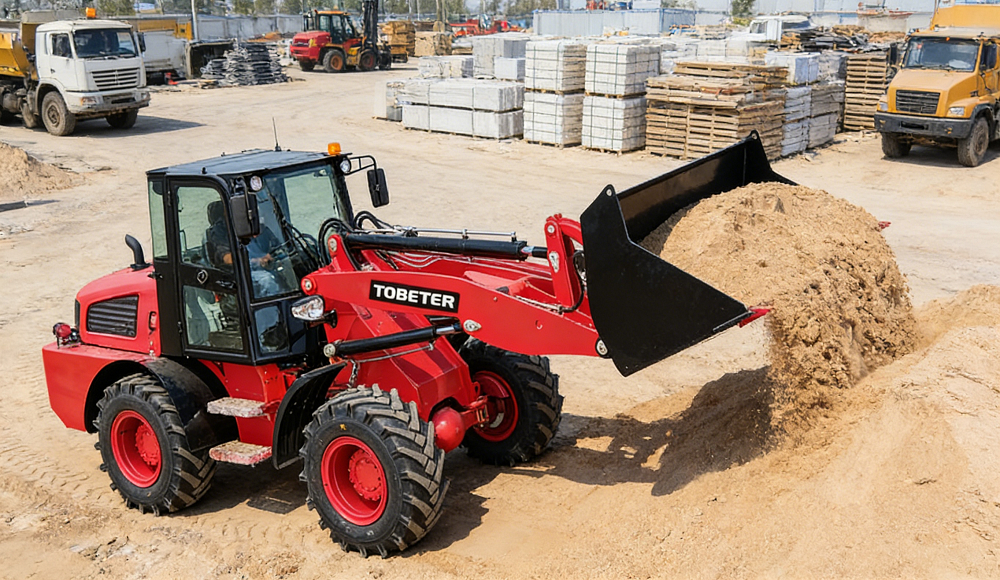
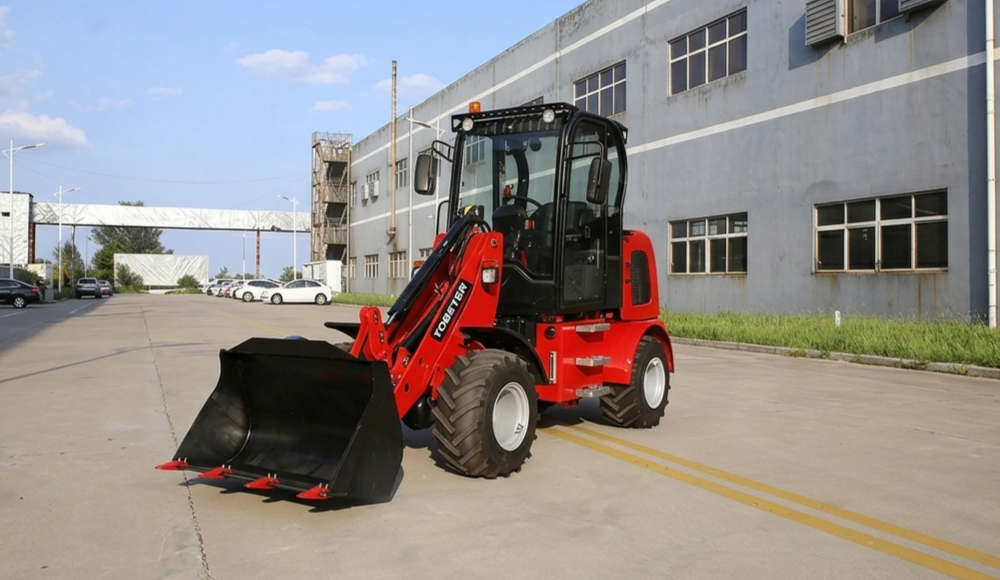
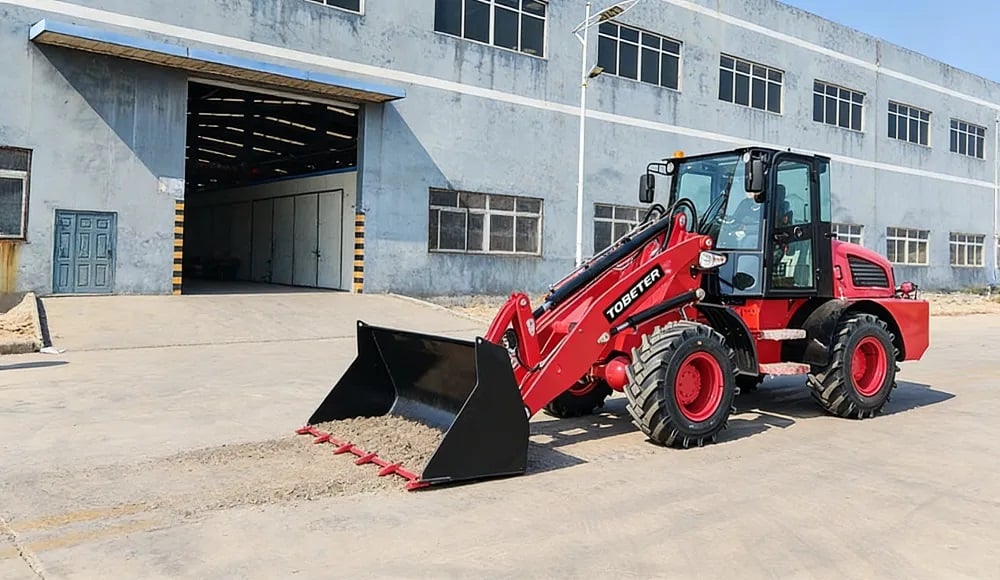
A compact wheeled loader is a small front-end loader mounted on wheels. It offers excellent lifting and loading capacity, stable balance, and smooth operation. The loader arms extend forward and upward to pick up, lift, and place material. Manufacturers like TOBETER and Caterpillar produce compact wheeled loaders designed for efficiency and reliability across construction, agriculture, landscaping, and industrial applications.
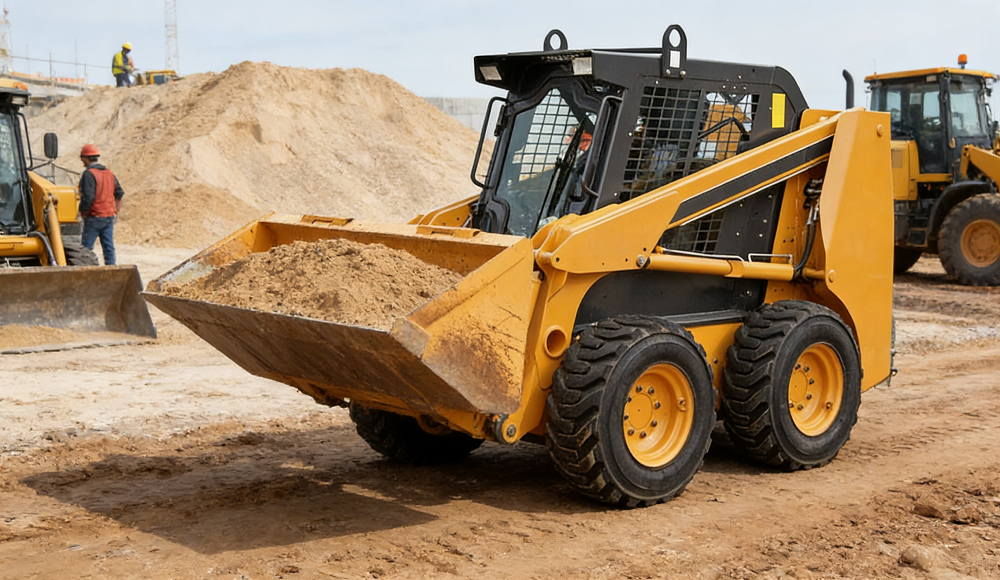
A skid steer loader is a compact, rigid-frame machine with lift arms attached directly to the chassis. It uses differential steering—by skidding wheels on one side relative to the other—to turn. This design allows the machine to pivot on its own axis, making skid steers incredibly maneuverable in tight spaces. Bobcat Company and John Deere are well-known skid steer producers.
Skid steer loaders excel in tight, confined spaces. Their ability to turn within their own footprint makes them ideal for:
Urban construction sites
Indoor work areas or garages
Landscaping projects with restricted access
Utility work around structures and obstacles
The skid-to-steer turning mechanism allows rapid changes in direction without needing extra space.
Compact wheeled loaders don’t turn on a dime like skid steers, but they do offer smooth and predictable steering, especially at higher travel speeds. Their wheelbase and articulated steering make them more stable on uneven terrain compared with a skid steer. For open areas, roadways, and larger job sites, compact wheeled loaders facilitate faster movement.
Verdict: If space is very limited and agility is critical, skid steers have the edge. For job sites with room to move, compact wheeled loaders offer smoother travel and more stability.
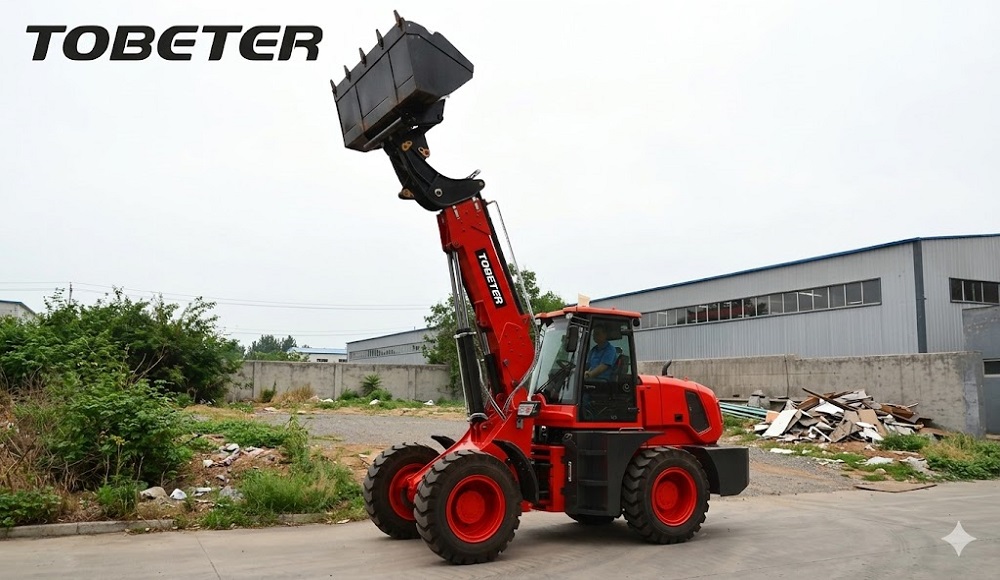
Compact wheeled loaders generally outperform skid steers in terms of lifting capacity, reach, and load control. Their design incorporates larger lift arms and better weight distribution, allowing them to:
Lift heavier loads at greater heights
Maintain smoother load placement
Retain stability even when fully extended
This makes them ideal for loading trucks, handling pallets, moving bulk materials, or placing material on racks.
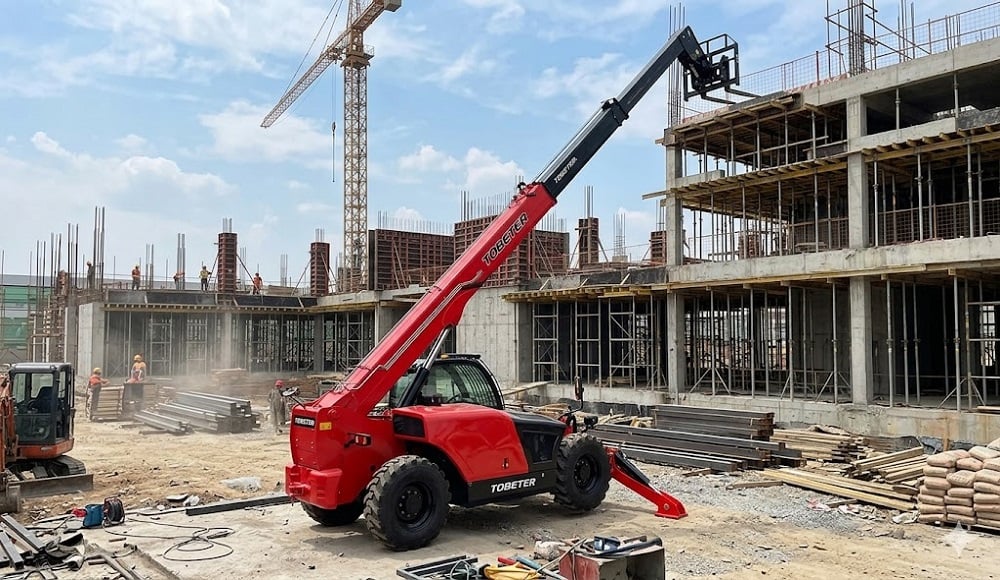
TOBETER compact wheeled loaders combine optimized lift geometry with durable structural design, supporting heavy-duty lifting with reduced hydraulic strain.
While skid steers have significant lifting power for their size, their lift height and reach are generally more limited compared to compact wheeled loaders. However, in close-range material handling tasks where high lift isn’t essential, skid steers remain effective.
Verdict: For lifting, placing, and heavy material movement, compact wheeled loaders typically deliver superior performance. Skid steers perform well for moderate lifts and short-reach tasks.
Both machines become highly versatile with attachments, but their attachment ecosystems differ.
Skid steer loaders have one of the broadest attachment markets in compact equipment, including:
Buckets (general purpose, dirt, utility)
Hydraulic breakers
Augers
Trencher attachments
Grapples
Snow blowers
Pallet forks
Skid steer attachments transform the machine into a multi-purpose tool, especially for landscaping, digging, demolition, and utility work.
Compact wheeled loaders also support a range of attachments such as:
Buckets (general, rock, multipurpose)
Grapples
Bale spears
Forks
Snow plows
Their attachment range covers most loader needs, but skid steers still have a deeper and more diversified third-party attachment ecosystem.
Verdict: Skid steers lead in attachment variety due to a larger aftermarket accessory base. Compact wheeled loaders still provide essential versatility but lean more toward loader-centric applications.
Compact wheeled loaders generally offer a more comfortable ride due to:
Spacious operator cabins
Articulated steering (less vibration)
Better suspension
Large windows and improved sightlines
These features reduce fatigue during long workdays and enhance operator confidence—especially important when precision material placement is required.
Skid steer cabins are often tighter with less suspension feedback. Operators must remain engaged as vibration and quick turning require constant control input.
However, visibility from skid steers is excellent for close-range work due to proximity to the load and pivot point.
Verdict: For all-day comfort, compact wheeled loaders typically provide a more operator-friendly environment. Skid steers are effective but can be more physically demanding.
Compact wheeled loaders provide:
Higher ground clearance
Better traction on flat and graded surfaces
Smoother travel at speed
Their stability makes them well-suited for hauling materials across larger job sites and unpaved access roads.
Skid steers perform well on firm surfaces, gravel, and short grass, but they can experience wheel slip and reduced tracking on loose, wet, or uneven ground.
Tracked variants (skid steers with tracks) address some terrain issues but at a higher cost.
Verdict: On soft ground, steep grades, and uneven terrain, wheeled loaders with proper tires and traction control have the advantage. Skid steers excel on firm, flat surfaces.
Skid steers are generally lighter with smaller engines, leading to lower fuel burn during short, stop-and-go tasks. Their simpler mechanical design also makes routine maintenance straightforward.
Compact wheeled loaders may consume slightly more fuel due to larger hydraulic systems and higher travel speeds, but this is often offset by increased productivity on larger jobs.
Routine maintenance costs vary depending on usage and service support. TOBETER emphasizes accessible service points and efficient hydraulics to reduce downtime and maintenance costs across its loader lineup.
Verdict: Skid steers are usually more fuel-efficient during short, tight-space tasks; compact wheeled loaders justify their slightly higher consumption with greater overall productivity on broader workflows.
Choosing between a compact wheeled loader and a skid steer depends heavily on specific jobsite requirements.
Interior demolition
Small landscapes
Tight-access gardens
Utility work around structures
Skid Steer Advantage
Bulk material loading
Gravel, dirt, or mulch transport
Roadside cleanup
Farm feed handling
Compact Wheeled Loader Advantage
Augers and trenchers
Snow blowers
Demolition hammers
Brush cutters
Skid Steer Advantage
Truck loading
High rack placement
Pallet moving
Construction material staging
There is no one-size-fits-all answer—the best machine depends on your needs:
Choose a skid steer loader if your work is concentrated in confined areas, requires a diverse attachment ecosystem, and demands agile maneuverability.
Choose a compact wheeled loader if your priority is lifting capacity, operator comfort, stability, high productivity over larger areas, and continuous hauling operations.
Many operations benefit from having both machines in their fleet, using each where it performs best. For small businesses and contractors seeking balanced performance, reliability, and cost effectiveness, compact wheeled loaders from brands like TOBETER deliver dependable lifting power and versatility across a wide range of tasks—not just in construction but in agriculture, landscaping, and material handling as well.