EN
EN

In the construction equipment industry, maneuverability is often a decisive factor when choosing the right machine for the job site. Whether working in tight urban environments, rugged mining operations, or large-scale earthmoving projects, operators need equipment that delivers both efficiency and control. Two commonly compared configurations in wheel loaders are articulating frame loaders and rigid frame loaders. Each has its strengths, but when it comes to maneuverability, the differences are significant.
Tobeter, a manufacturer specializing in construction equipment, often receives this question from contractors: which type of wheel loader is better for confined or complex job sites? The answer depends on operational needs, but understanding how each system works is key to making the right decision.
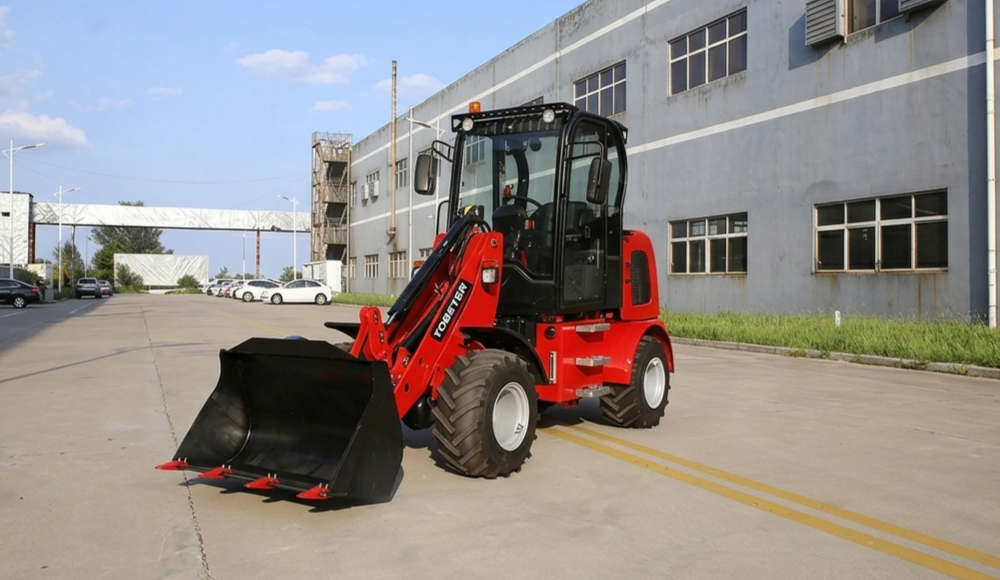
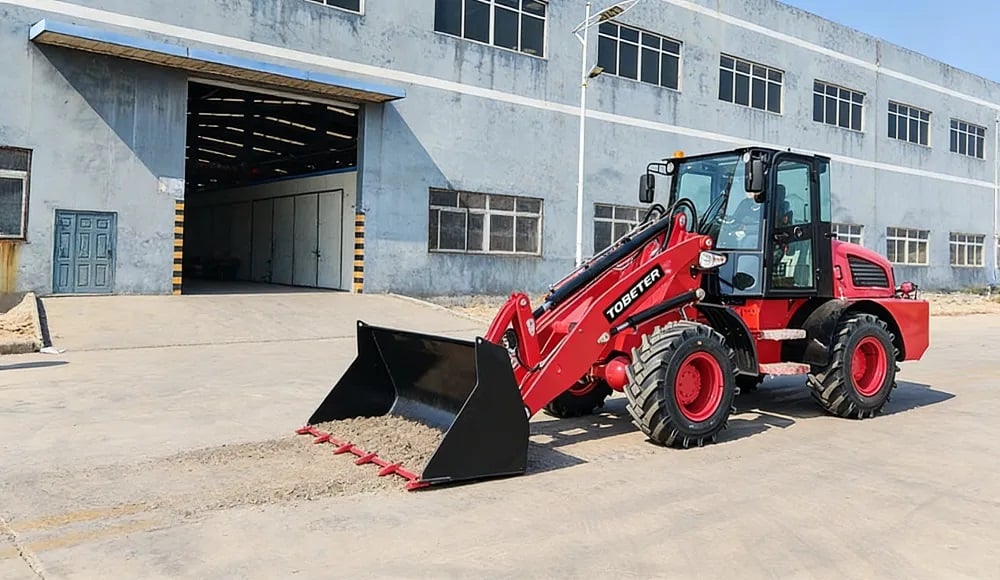
An articulating wheel loader features a pivot joint located between the front and rear frames. This joint allows the machine to “bend” in the middle, enabling the front and rear wheels to follow different paths during a turn. Instead of relying on steering angles at the wheels alone, the entire machine changes direction at the articulation point.
This design provides a much tighter turning radius compared to rigid frame machines. In practice, operators can navigate narrow job sites, congested material yards, and obstacle-filled environments with greater ease. The reduced need for wide turning arcs also minimizes ground disturbance, which is especially valuable on finished surfaces or soft terrain.
Another advantage is improved stability during load handling. Because the load remains centered between the axles during articulation, weight distribution is more balanced when turning under load. This makes articulating loaders highly effective in material handling tasks such as gravel yards, agriculture, and municipal construction.
Rigid frame wheel loaders, as the name suggests, have a fixed chassis with no articulation point. Steering is achieved entirely through the front axle, similar to a traditional vehicle but with a larger turning mechanism. While this limits turning flexibility, it also provides structural advantages.
Rigid frames are generally stronger and more durable under extreme working conditions. They are often preferred in heavy-duty applications such as mining, quarry operations, and large-scale earthmoving where straight-line pushing power and structural integrity are more important than tight maneuverability.
However, due to their larger turning radius, rigid frame loaders require more space to operate. On confined job sites, this can lead to reduced efficiency and increased time spent repositioning the machine.
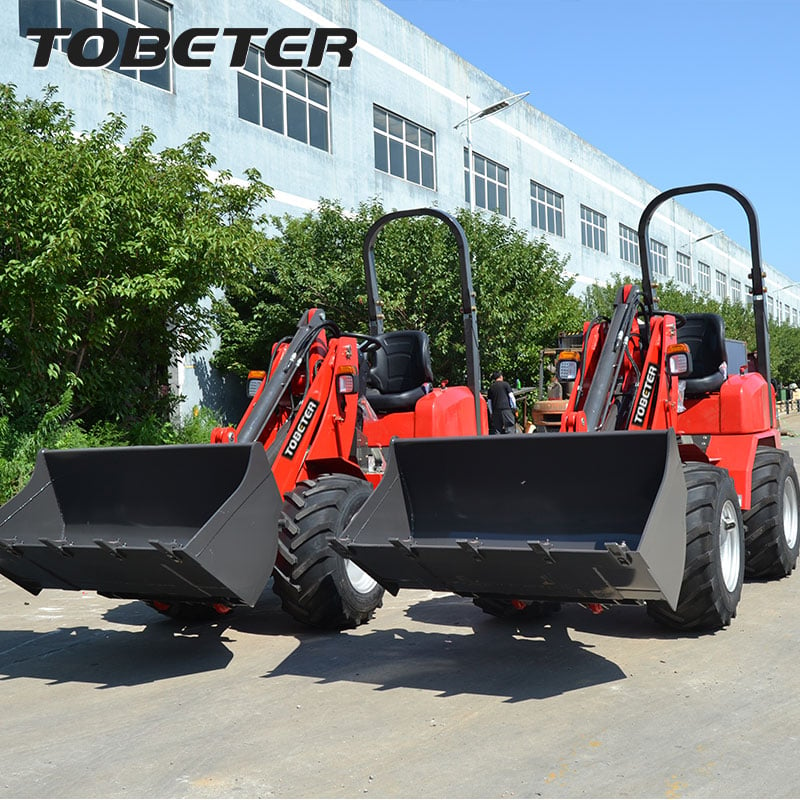
When comparing maneuverability, articulating wheel loaders have a clear advantage. Their center articulation allows the machine to pivot tightly, making them highly effective in confined spaces and complex job sites. This design improves turning radius, enhances control, and enables precise material handling, which is especially useful in urban construction, landscaping, and indoor or semi-enclosed work areas.
Rigid frame loaders are less agile but offer strong stability and efficient power transfer. They perform best in open environments where space is ample and tasks involve long, straight travel. While not as maneuverable, they deliver consistent performance for heavy-duty, large-scale operations.
The choice between an articulating and rigid frame wheel loader ultimately depends on job site conditions and operational priorities. If your work involves tight spaces, frequent turning, and precision handling, an articulating loader is typically the better solution. If durability, pushing power, and large-scale earthmoving are more important, a rigid frame loader may be the better fit.
Tobeter designs and manufactures construction equipment with real-world job site demands in mind. Understanding these differences helps contractors select the right machine to maximize productivity, reduce operational costs, and improve overall efficiency. In modern construction environments, maneuverability is not just a feature—it is a competitive advantage.